Beyond dashboards: Introducing Decision Execution Platforms
Why the next category in enterprise analytics will enable business outcomes, not just insights
by Marc Solomon and Marcello Pedersen
- Decision Execution Platforms (DEPs) are a new category of enterprise analytics from Databricks FDE that run the executive decision loop end to end, signal through outcome, on the customer's own governed Databricks infrastructure, with the executive surface delivered as a Databricks App
- Traditional BI improves the inputs to decisions; the decision workflow itself stays manual, fragmented, and slow. Organizations need an automated and orchestrated approach to insight-driven decision making.
- DEPs turn signals into executed, measured action with predicted-vs-realized impact tracked in a governed Decision Log - and an early Fortune 100 retail deployment targets a fulfillment gap the client values at over $100M a year.
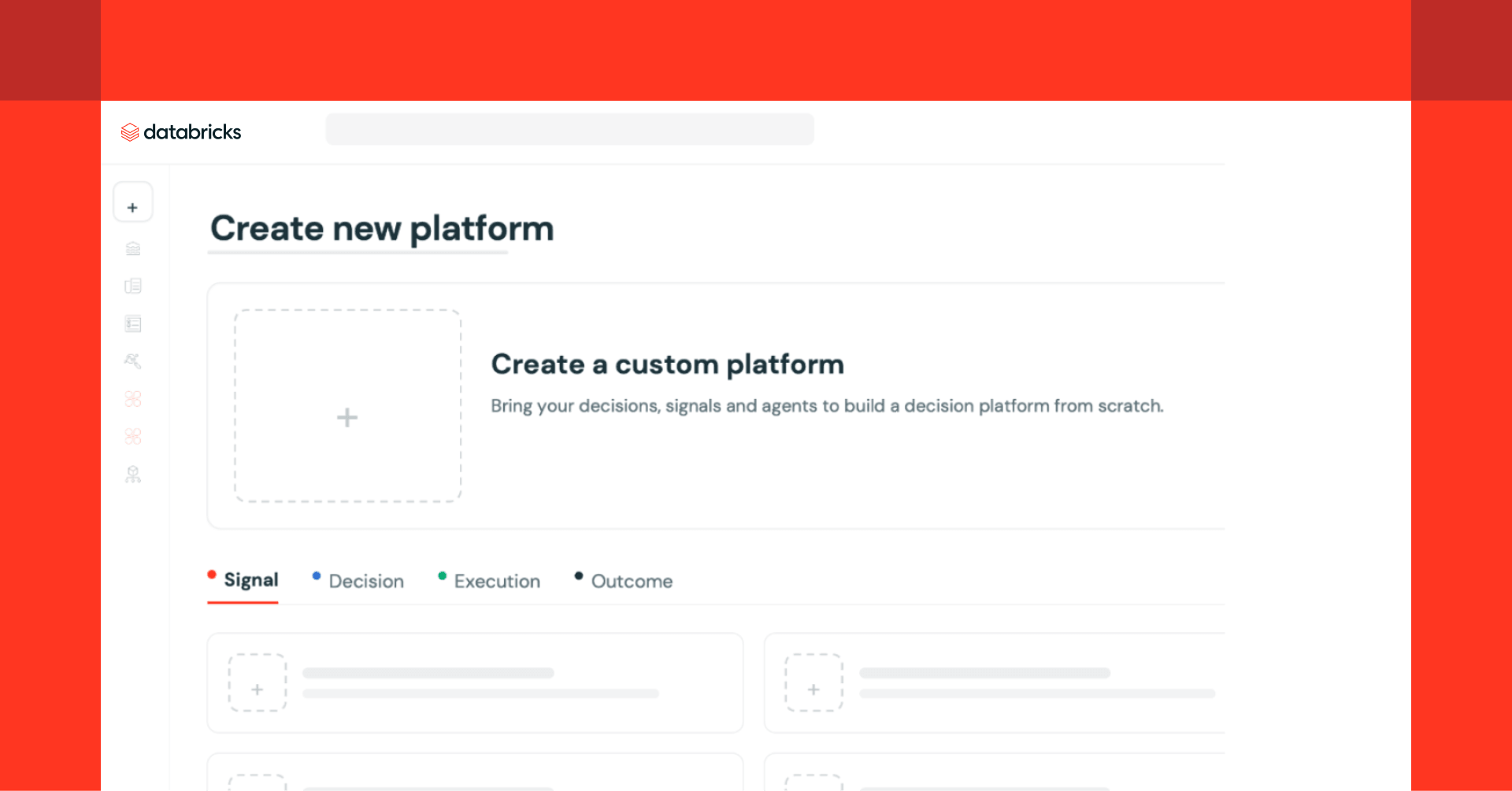
Figure 1: Decision Execution Platforms by Databricks Forward Deployed Engineering
Decision Execution Platforms (DEPs) are a new category of enterprise analytics from Databricks Forward Deployed Engineering (FDE). Rather than surfacing insights alone, DEPs run executive decision loops end to end that impact the bottom-line: signal, decision, execution, and tangible business outcome, all on governed Databricks infrastructure.
BI only improved the inputs to executive decision-making
Global enterprise spend on BI software reached $34.8B in 2025 and is forecast to hit $72.2B by 2034. The category is now one of the largest in enterprise software.
BI tools have helped make leaders better informed. A COO can now know faster than ever when margin is falling, inventory is aging, fulfillment is slipping, demand is changing, or a forecast is moving off plan. These insights are now key to modern business operations, but they only support one small part of the full executive decision-making process.
Today’s dashboards improve inputs to decisions, but they do not move them forward. The executive’s goal is to act on what the data shows - and this is where today’s BI tools stop, and where the next category begins.
Decision-making is still manual, fragmented, and slow
The typical decision workflow inside an enterprise looks much like it did decades ago. An executive sees a signal on a dashboard, in a weekly report, or in an email. They convene a meeting where options are debated. A decision lands in a deck or email. Implementation is delegated across teams using spreadsheets, project trackers, and Slack threads. Weeks later, someone tries to measure impact, on another dashboard, one-off analysis, or a phone call.
Every step is manual and every system is separate. The signal lives in a dashboard, the reasoning lives in a meeting, the decision lives in a deck. The execution lives across spreadsheets and threads, and the impact measurement lives somewhere else entirely. Nothing is connected, and nothing is orchestrated. Most organizations can now measure KPIs, very few can measure how their decisions affected them.
This is why many organizations, even data-rich ones, still struggle to make decisions at the pace and scale the business needs.
But this is changing. Governed enterprise data, real-time analytics, application surfaces, transactional state, and production-grade agents are converging - creating the conditions for the manual coordination, fragmentation, and slow feedback loops of the past to be replaced by one continuous, governed system. Gartner predicts that by 2028, 45% of CIOs will lead AI agent systems outside IT, becoming co-architects of enterprise work resource models. We believe this next phase of analytics will turn data visibility into action and, most importantly, outcomes.
What is a Decision Execution Platform (DEP)?
Today we introduce Decision Execution Platforms by Databricks FDE, or DEPs.
Decision Execution Platforms (DEPs) are a new category of enterprise analytics solutions - designed not to surface information faster, but to run executive decision-making end-to-end, enabling:
- More decisions to reach execution - signals turn into approved, executed action instead of stalling in meetings, decks, or threads
- Enhanced quality, grounded in always-on data - real-time context, predicted impact, and viable alternatives surfaced before approval and live data continuously enriching agent decisions
- Continuous learning - every decision and its outcome feed back, training the system, executives, and organization over time
DEPs break the executive decision down into four distinct, computable stages - signal, decision, execution, and outcome - and let operators run them as one continuous loop on a single governed operational plane.
- Signal - real-time detection of changes against KPIs, surfaced when they matter
- Decision - each signal supported with an agent-recommended action, viable alternatives, predicted impact and the reasoning behind them
- Execution - one click pushes the chosen option to the systems of record and dispatches the agents that carry out the work
- Outcome - every decision writes back its results: predicted vs realized impact, the delta, and lessons to improve the next decision
The executive remains the unit of authority, while the agents handle the work between the signal and the business outcome that used to require a disparate chain of meetings, decks, and follow-ups. The loop runs continuously, and every decision plus its outcome persist together in the Decision Log inside the organization’s own data plane.
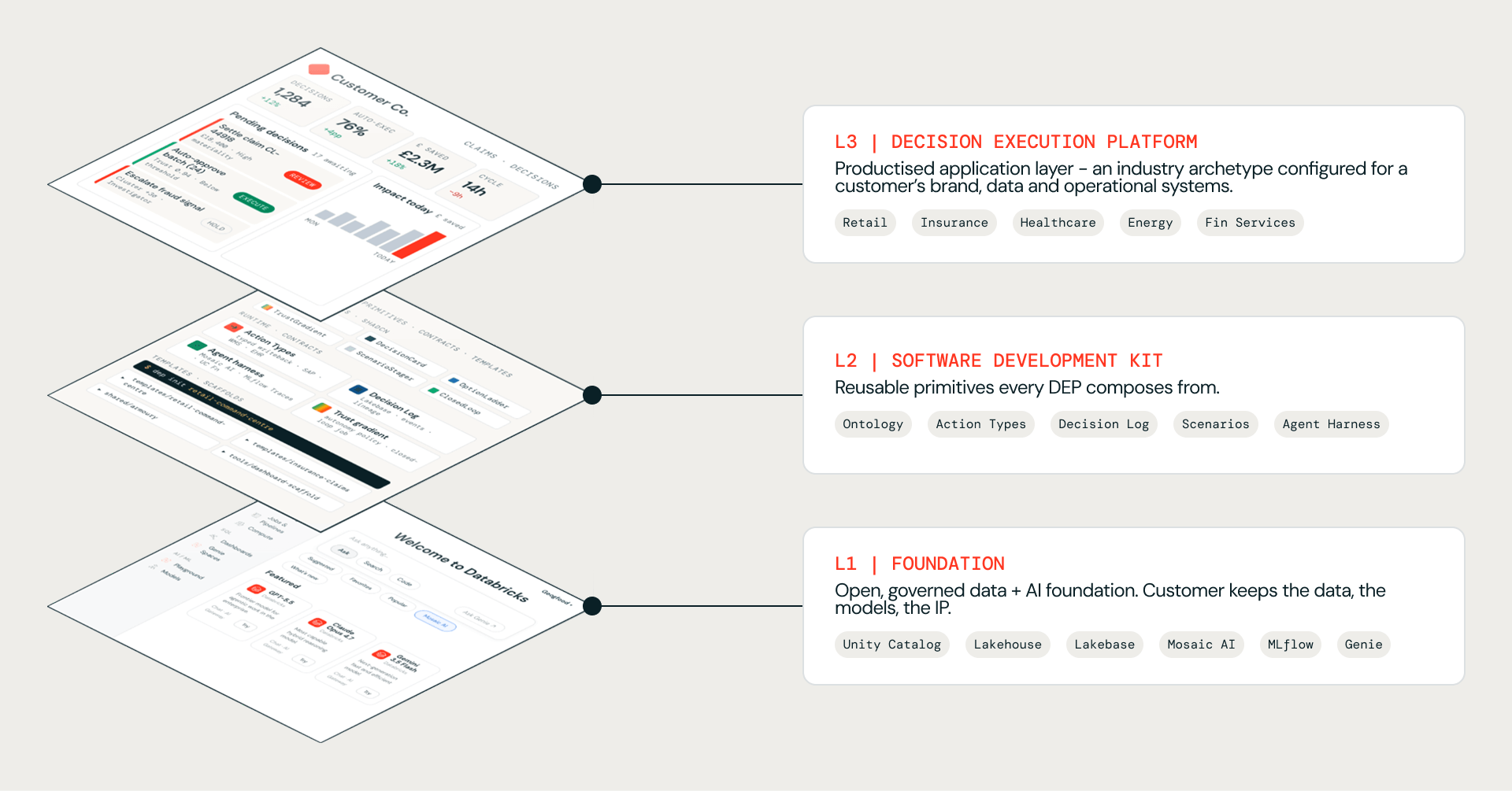
Figure 2: Decision Execution Platform by FDE architecture layers
How Decision Execution Platforms Work: The Architecture
A DEP needs more than a visualization layer on top of legacy CSVs. It needs a governed architecture where data, AI, applications, agents and operational state work together as one system. The DEP stack has three layers, each built on the one below, all running on Databricks. The top layer, the one an executive actually touches, is a Databricks App.
- Layer 1 - Foundation - Open, governed data and AI on the customer's own Databricks instance. The customer keeps the data, the models, and the IP. Built from Lakebase (real-time transactional state), Genie(natural-language access), Unity Catalog (governance), Lakehouse (analytical data), , Agent Bricks (agents and models), MLflow (lifecycle), and . Every signal read, every decision made, and every outcome measured lives in one governed plane.
- Layer 2 - Software Development Kit - Developed and maintained by Databricks FDE. Reusable primitives every DEP composes from: the Genie Ontology (typed shape for every signal, decision, and outcome), Action Types (reviewable, reversible agent behavior), the Decision Log (full chain of each decision against its intent), Scenarios (compare paths before approving), and the Omnigent Agent Harness (wires it all together). These primitives turn real-time, always-on executional agents into a repeatable category.
- Layer 3 - Executive Surface - The productized application layer, built on Databricks Apps and developed by Databricks FDE for each client. The app runs inside the customer's own workspace, so it uses the same identity, permissions and Unity Catalog lineage as the data underneath it. Nothing has to be copied out of the governed plane, and there is no separate hosting or auth stack to stand up. FDE ships archetypes for Insurance, Healthcare, Energy, Financial Services, Retail and more. Each one inherits the SDK in Layer 2 and the foundation in Layer 1, so a DEP is configured for a customer rather than rebuilt for them.
Together, these three layers form the governed stack that runs an executive's full decision loop - signal to outcome - inside a single data plane.
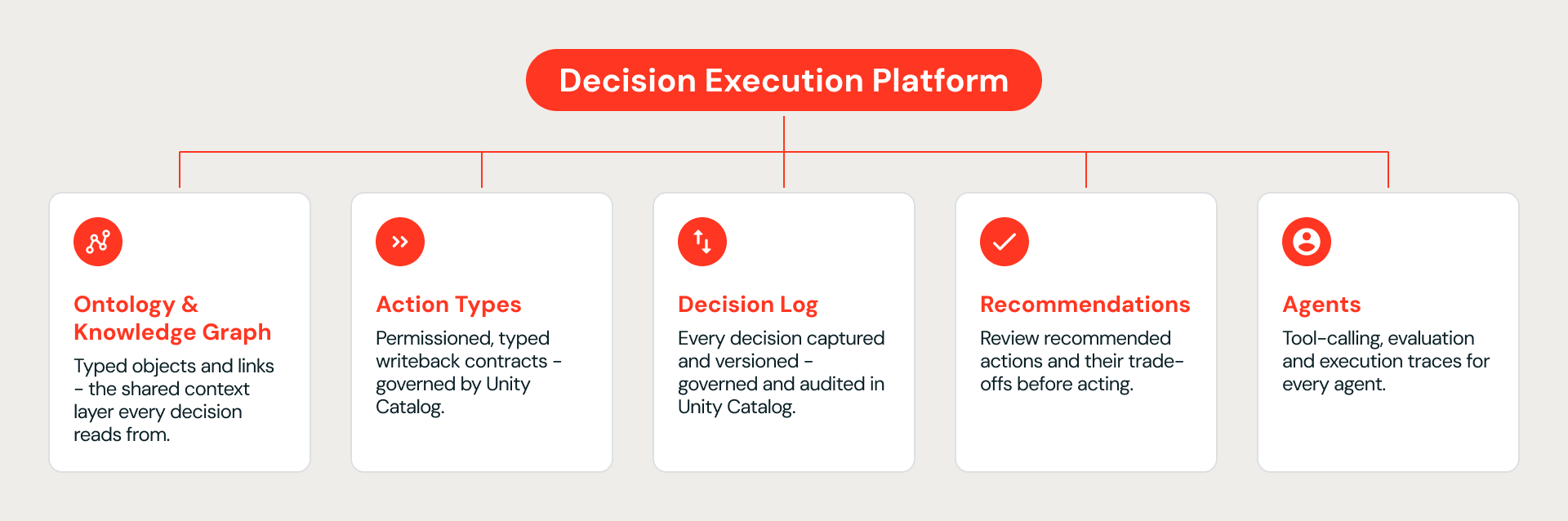
Figure 3: Decision Execution Platform components
Case study: Consumer Goods
Our FDE team recently helped a large athletic retailer close the gap between the delivery timelines they give to customers at checkout and the fulfillment-optimization system that has to physically route every order.
Previously the two systems worked from divergent data, and planners spent hours each day reconciling agent recommendations against operational reality. SLAs broke, expedited shipping costs spiked and the client's own internal estimate puts this single gap at over nine figures a year in bottom-line impact.
Over four weeks we co-developed with the client team a working DEP instance for fulfillment optimization - scoped to a named outcome, KPIs and OKRs, not features or outputs.
The DEP was composed of a unified ontology - covering fulfillment node, carrier, and agreed delivery timelines - modeled in Unity Catalog. Typed Action Types let planners and agents reroute capacity, simulate constraints, and execute decisions back into the production fulfillment system without raw write-access. The analytical context, the simulation engine, the agent runtime, and the operator application all ran on the client's own Databricks workspace. No multi-vendor data plane and no proprietary ontology to migrate into.
As we enter the scaling phase of this first DEP deployment, we are now on track toward measurable bottom-line and customer-satisfaction outcomes, and giving supply-chain executives end-to-end decision authority across the loop.
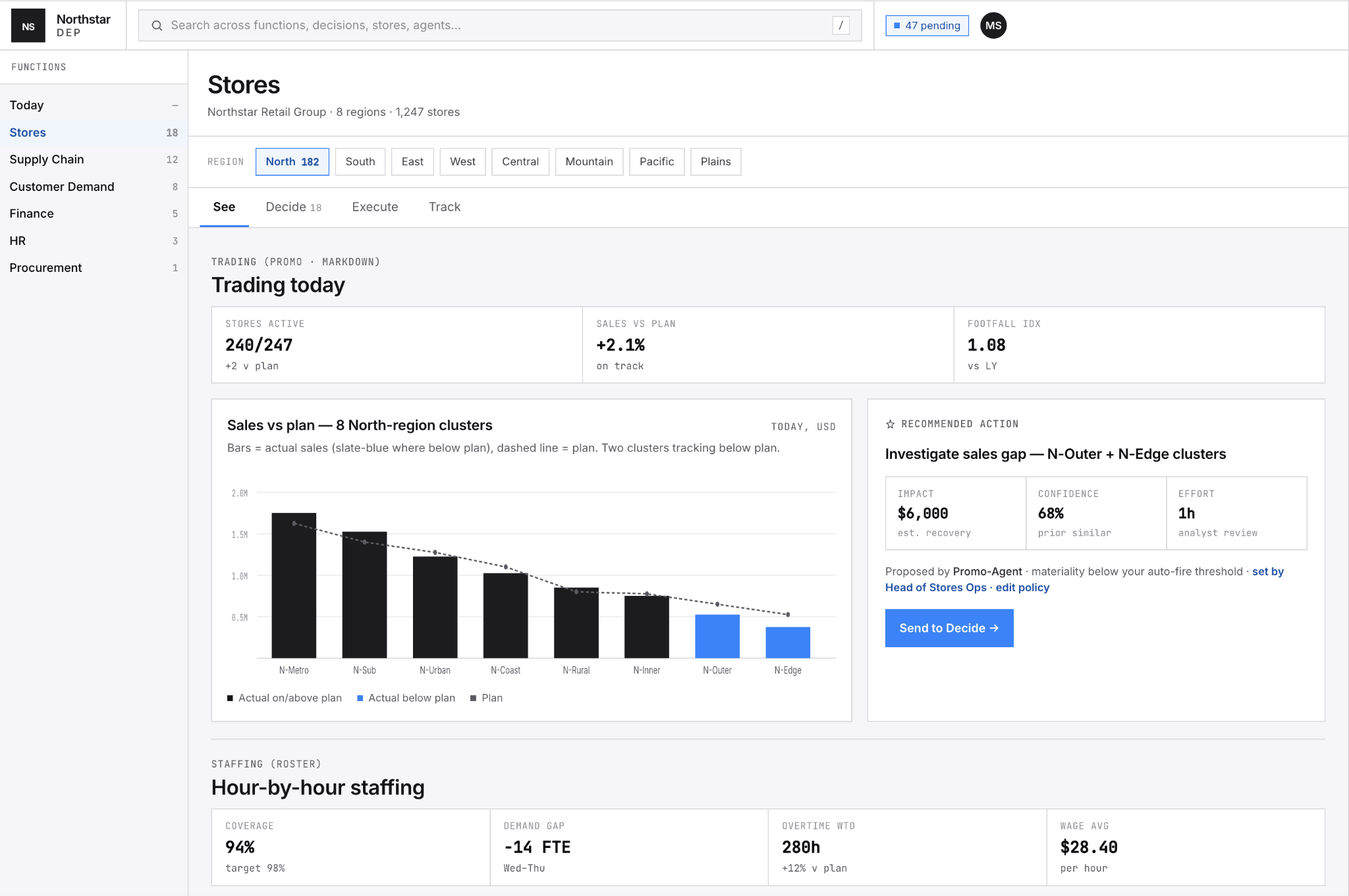
Figure 4: Decision Execution Platform developed for global retailer
What this means for the future of enterprise decision-making
For decades, analytics platforms helped enterprises build better visibility. That work still matters, and leaders will always need trusted data, clear metrics, and strong dashboards.
However the frontier has moved, and the next phase of analytics is building systems that act on what the data shows. The companies that do not move in this direction risk treating AI the way many organizations treated early analytics: as an add-on to existing processes rather than a reason to redesign the process itself - and could lose out on an era-defining step change in how organizations are managed.
Decision Execution Platforms are the new category Databricks FDE is defining for this shift. The question is no longer only: what is happening in the business? It now becomes: what should we do, how do we execute it, and did it work?
To learn more about what Decision Execution Platforms by Databricks FDE can do for your enterprise and to request a demo, please contact dep-fde@databricks.com
Get the latest posts in your inbox
Subscribe to our blog and get the latest posts delivered to your inbox.