Introducing Genie Agent Mode
by Hanlin Sun
- Agent mode enables users to ask Genie a more advanced class of questions (Why? What if? How could we improve?) and get meaningful answers.
- Behind the scenes, Agent mode investigates like a data analyst: planning, testing hypotheses, and reasoning across queries to answer your business questions.
- Agent mode has been tuned to dynamically scale its reasoning to your question’s complexity—this results in faster answers for everyday questions and more rigorous analysis when tackling complex topics.
We are excited to introduce Agent mode in Genie spaces. Our team has developed a powerful agentic process that iteratively plans, explores, and reasons over your data to answer your business questions. As part of Databricks’ Week of Agents, this blog highlights another way we’re changing how organizations interact with their data using agentic AI.
This experience unlocks a much more actionable level of data analysis for everyone in your organization. Now, anyone can get real-time insights into complex business questions like:
- Why did our churn rate spike in Q3?
- How can we optimize our campaign spend?
- What revenue impact should I anticipate if these two supply lines are interrupted?
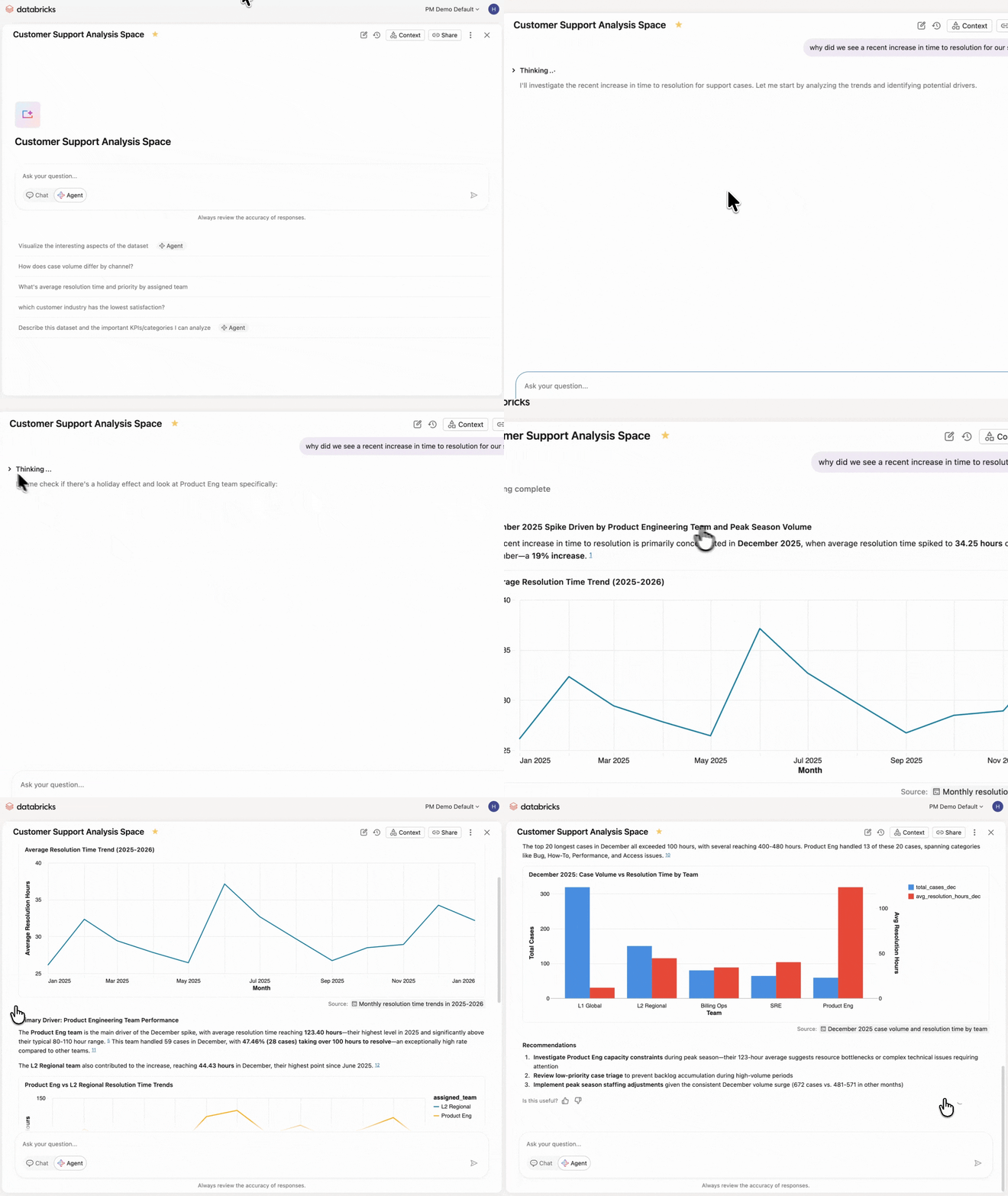
How Agent Mode Works
When you ask a question in Agent mode, Genie doesn’t just return a single query. It investigates the problem like a real data analyst: planning an approach, testing hypotheses, and iterating toward an explanation.
For example, imagine a Genie space for customer support. You notice a spike in reopened cases in December 2025 and ask: “What’s contributing to the spike in reopened support cases?”
Agent mode first confirms the spike, then explores possible contributors such as customers, products, categories, or teams. It uses the business context in your Genie space, including Unity Catalog metadata and author-defined semantics, to focus on the most relevant potential contributing factors.
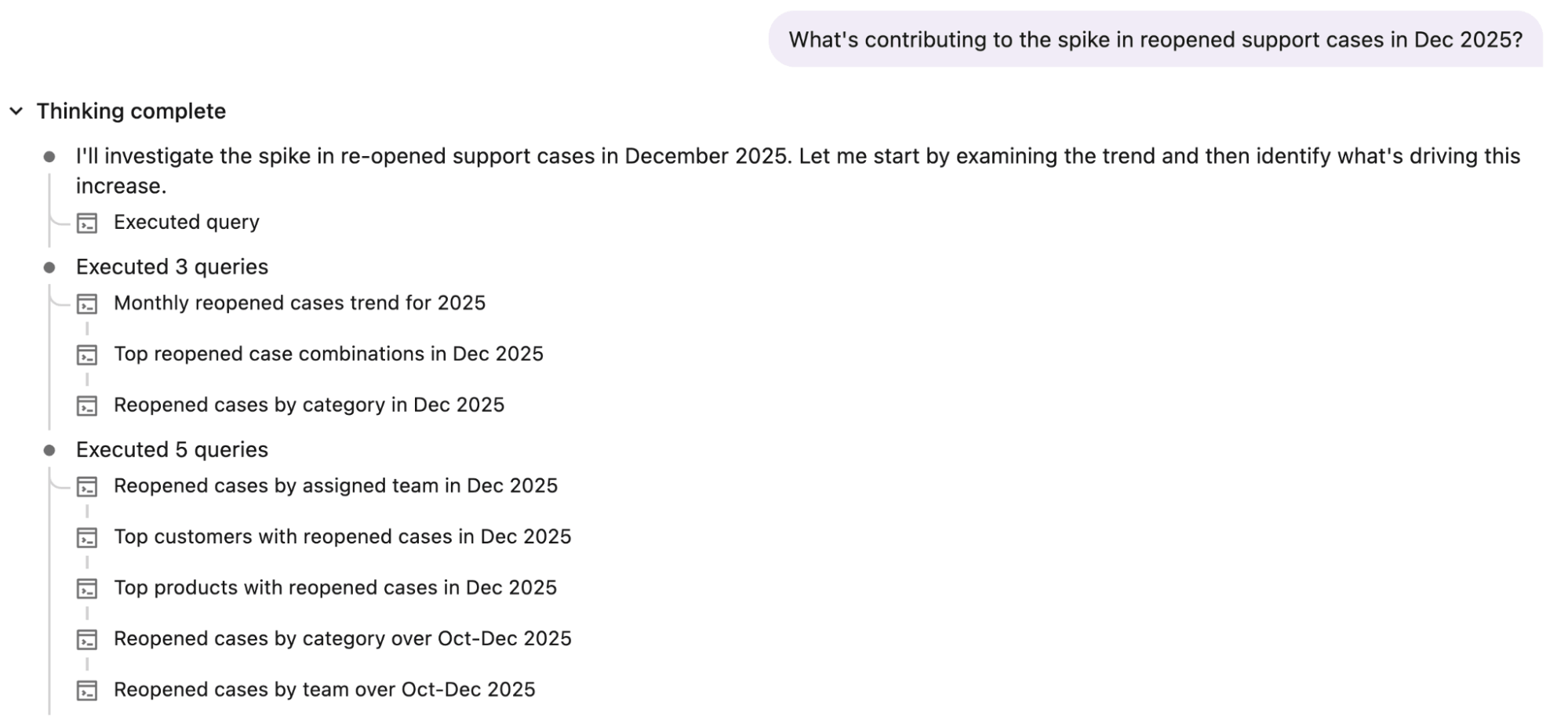
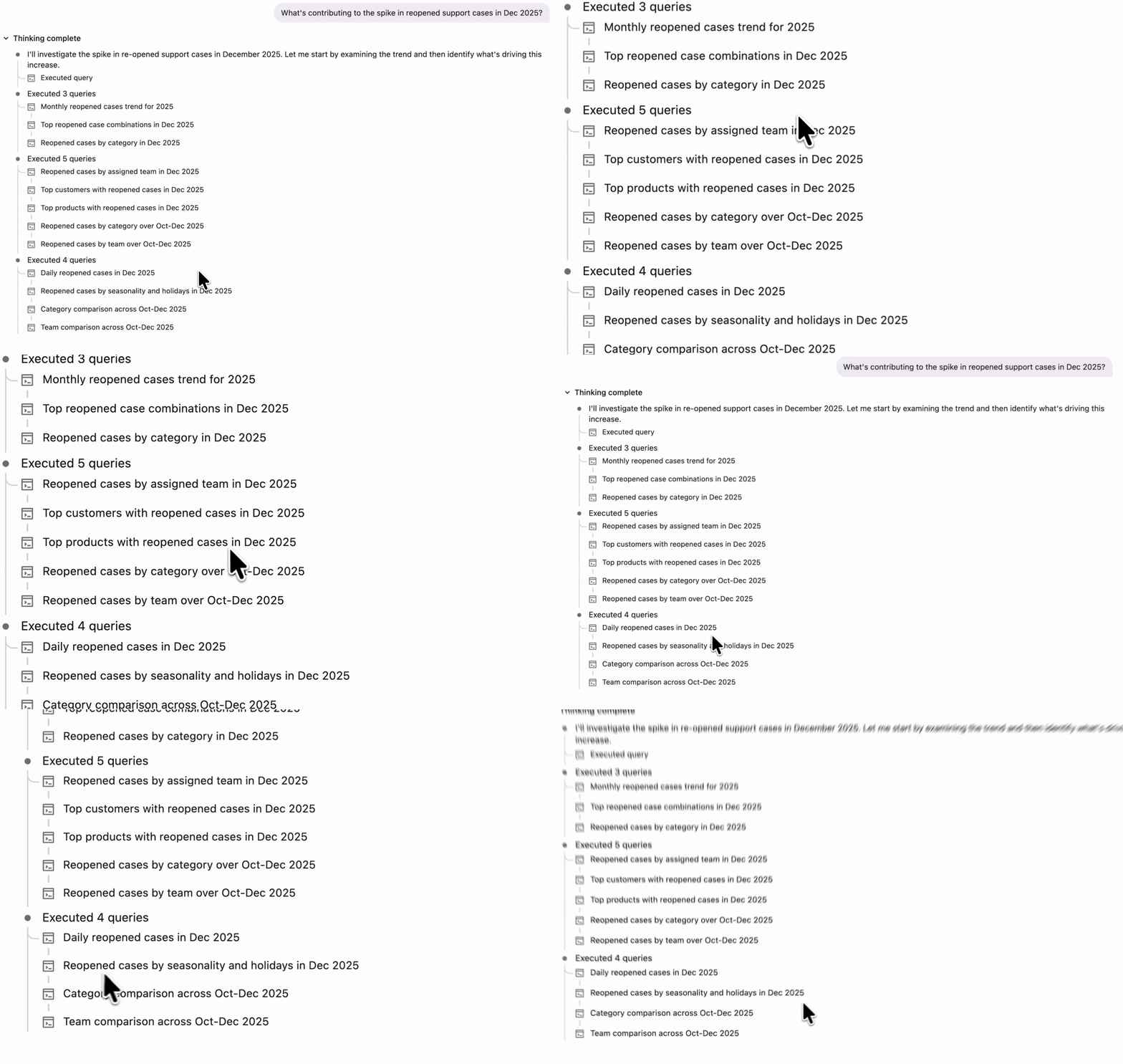
Agent mode then evaluates these hypotheses by executing multiple queries against the underlying data. The semantics defined in Genie’s knowledge store teach it how to produce accurate queries. We also made Agent mode’s work transparent so users can always verify its accuracy.
During its analysis, Genie continuously reflects on the results of each query and decides what to explore next. In this example, after testing several potential drivers of the spike, the agent decides that it should further investigate if seasonal patterns are contributing to the spike. This iterative cycle of hypothesis generation, querying, and reflection allows Genie to explore data more thoroughly and arrive at a well-supported explanation.
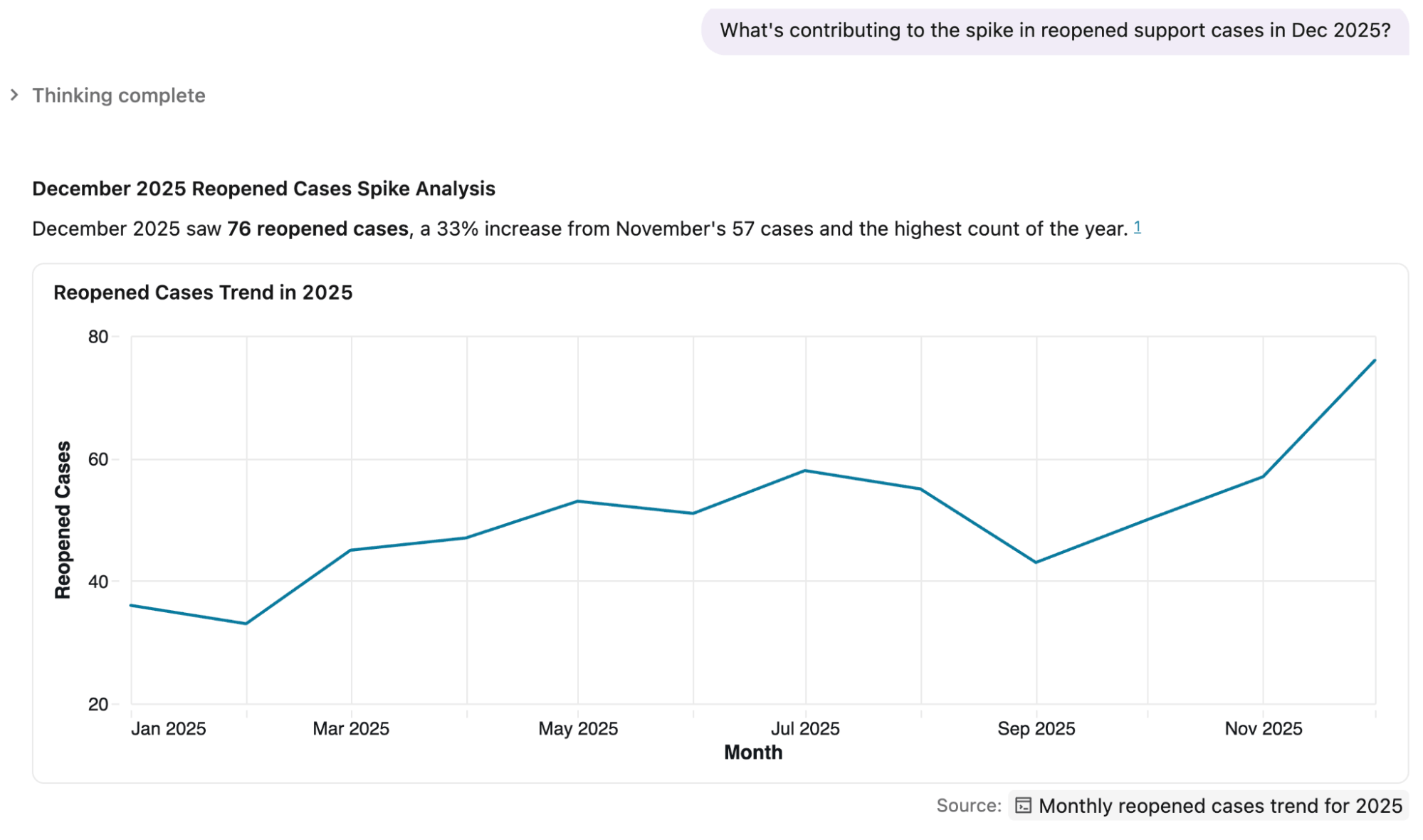
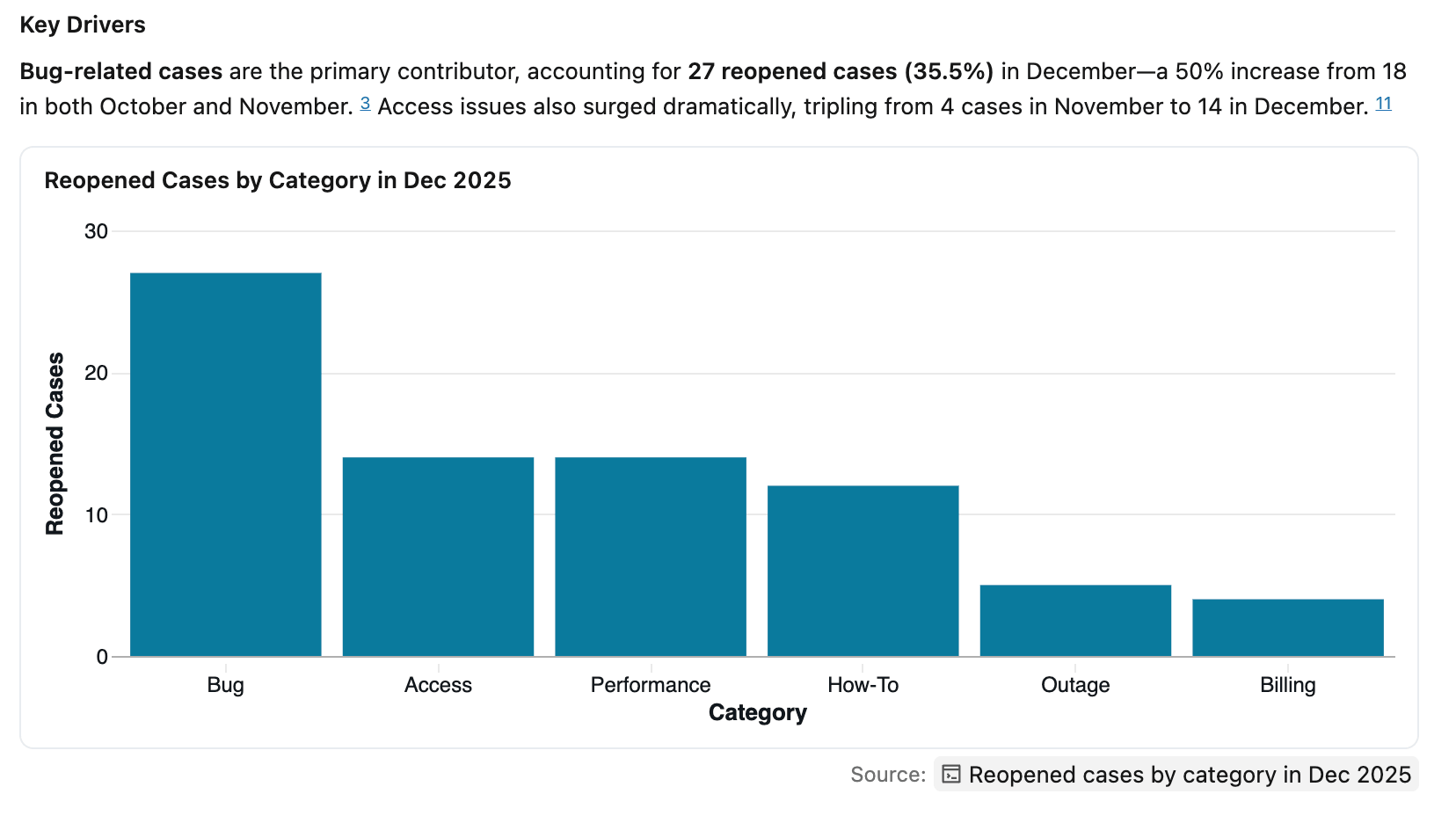
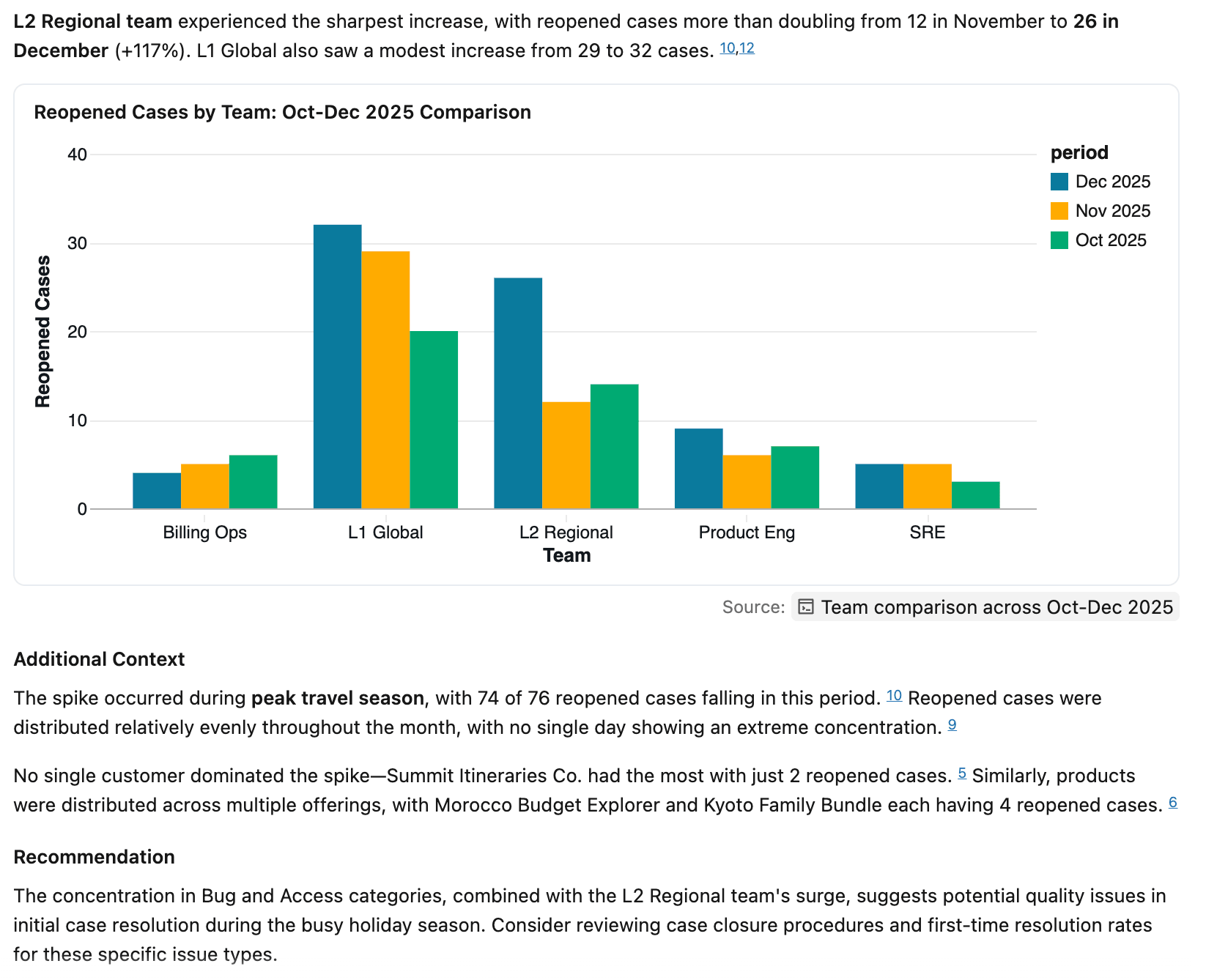
After completing its analysis, Genie generates a report of its findings. Following this example, the report first quantifies the increase in reopened cases and then identifies the primary contributors—namely a rise in bug-related cases and performance from the L2 regional team. To support these conclusions, the report also includes visualizations and references to the underlying SQL for users to review.
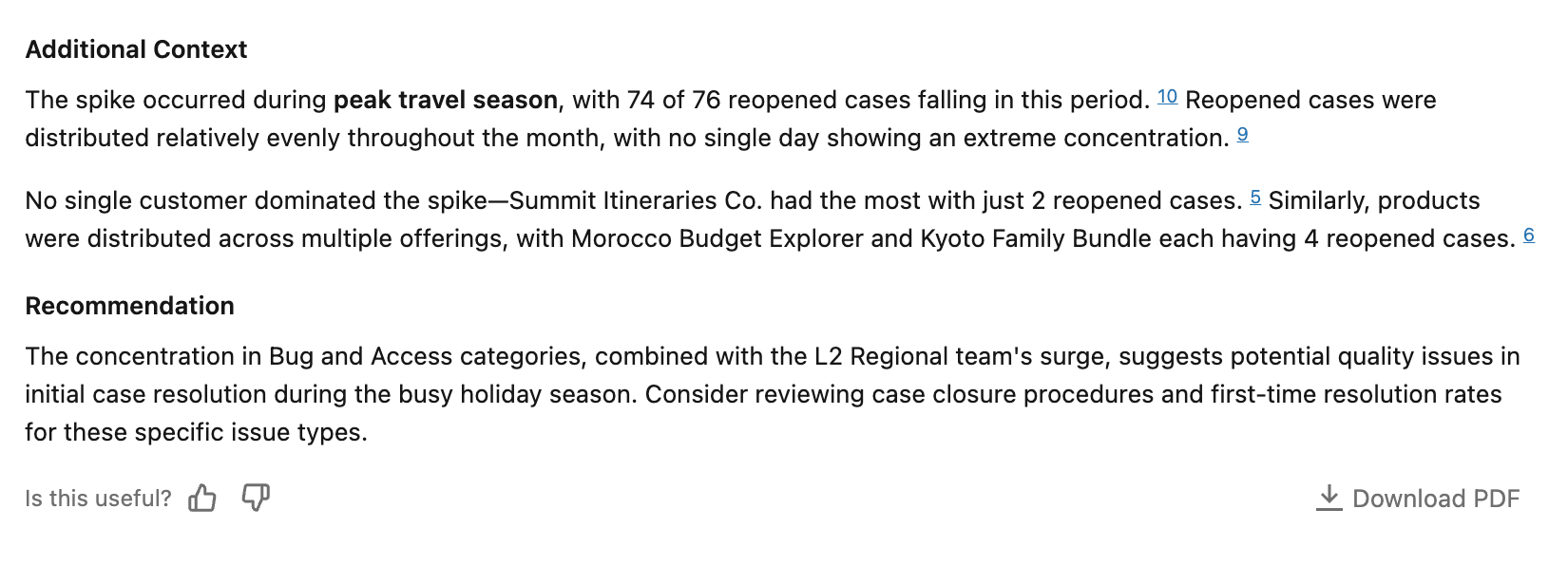
Depending on the type of question, Genie also provides actionable recommendations on what teams should focus on to improve performance. Users can then share these reports directly in the platform or download them as PDFs to easily distribute insights and collaborate.
Built for Questions of Any Complexity
Agent mode not only unlocks advanced business investigations—it improves accuracy across all question types, from simple analytics to multi-step analysis.
Even for straightforward questions, it takes small validation steps to ensure it understands the data before responding. We’ve also tuned the agent to dynamically scale its reasoning to the complexity of the task—moving quickly for simple prompts, and spending more time planning and evaluating for deeper investigations.
The result is faster answers for everyday questions and more rigorous analysis when tackling complex problems.
Users interacting with Genie inside AI/BI Dashboards can also take advantage of this new experience. When you ask questions to Genie from a Dashboard, it leverages Agent mode by default.
Get Started Today
Workspace admins can now confirm Agent mode is enabled in the Workspace Previews page. Once enabled, simply turn on the Agent toggle in your Genie spaces and ask your business questions.
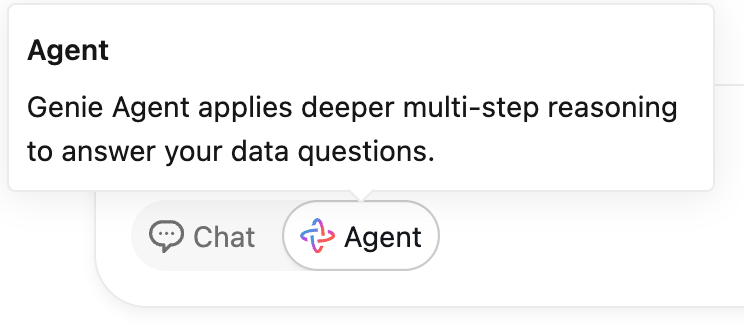
Agent mode is now available, with much more to come including API support and unstructured document analysis. Give Agent mode a try today — we can’t wait to hear what you think.
Get the latest posts in your inbox
Subscribe to our blog and get the latest posts delivered to your inbox.