New in Migrations: Faster and More Predictable
Lakebridge’s latest AI-powered updates reduce rework, surface issues early, and help teams move quickly with confidence
by Jonathan Brito, Guenia Izquierdo Delgado and Kaitlin Baumgardner
- Analyze existing source system usage with Lakebridge’s assessment tool, now with profiling support for Synapse
- Convert more complex SQL using Lakebridge’s AI-powered code converter and the Databricks Assistant
- Navigate migration workflows easily with a new, intuitive Lakebridge desktop app
Migrating off a legacy data warehouse poses many challenges – unpredictable timelines, technical debt, manual validation, and high execution risk. Since launching last summer, Lakebridge has helped data engineers remove that uncertainty by turning migrations into a predictable, automated process that’s easier to plan, run, and trust. A free tool built for real-world complexity, Lakebridge brings assessment, code conversion, data migration, and reconciliation into a guided, end-to-end process. And it works. Over 1,000 customers and partners have used Lakebridge to move from slow, costly legacy systems to the Databricks Data + AI Platform.
This blog walks through the three latest Lakebridge advancements — more comprehensive assessment features, AI-powered SQL conversion, and a new guided user experience— that remove uncertainty from warehouse migrations and help teams move forward with confidence.
Predictable migration effort and cost
Planning a migration is often the most difficult step. Teams struggle to understand the true scope, usage patterns, and cost profile of their existing environment before work begins, leading to missed dependencies, inaccurate estimates, and unexpected rework.
Lakebridge automatically generates an assessment of your existing environment, helping you understand the impact and effort to migrate to Databricks. The profiling feature, now with support for Synapse, extracts and analyzes metadata from database systems to provide insights into your source environment, including system configurations, resource utilization, query patterns, and performance metrics. These insights are published to a dashboard in a Databricks workspace, allowing you to understand your legacy system usage and work with your Databricks team to accurately measure the cost savings from migrating to Databricks.
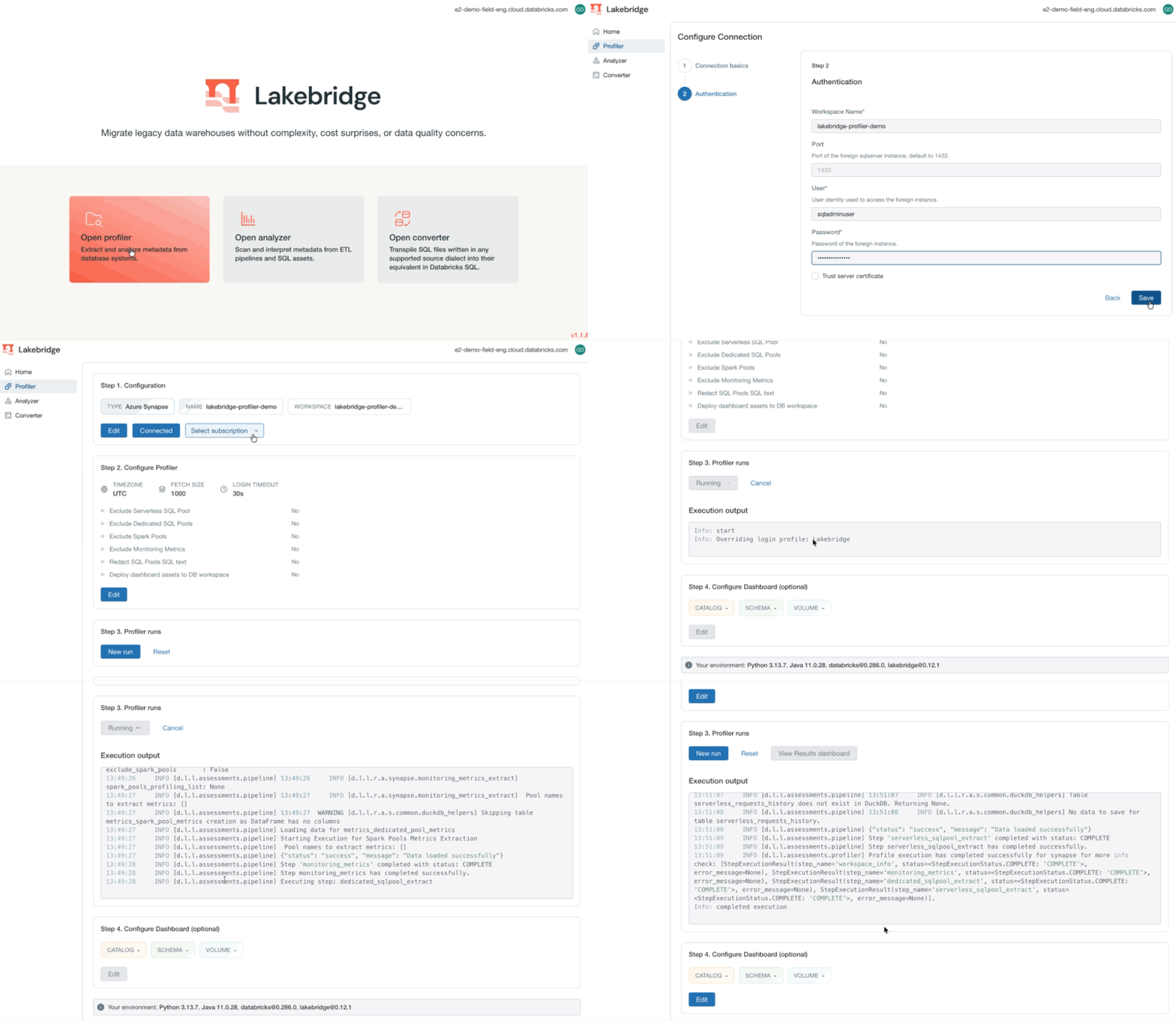
You can also use Lakebridge’s assessment to analyze your migration’s scope, usage and complexity. The analyzer feature brings early visibility into unsupported constructs, dependencies, and complexity, so teams can plan with confidence, avoid rework, and move through migrations faster.
AI-powered code conversion
Code conversion has historically been one of the most time-consuming steps of a migration. Legacy systems rely on proprietary dialects, deeply nested logic, and stored procedures that traditional rule-based tools can’t fully translate, forcing teams into lengthy and error-prone manual rewrites.
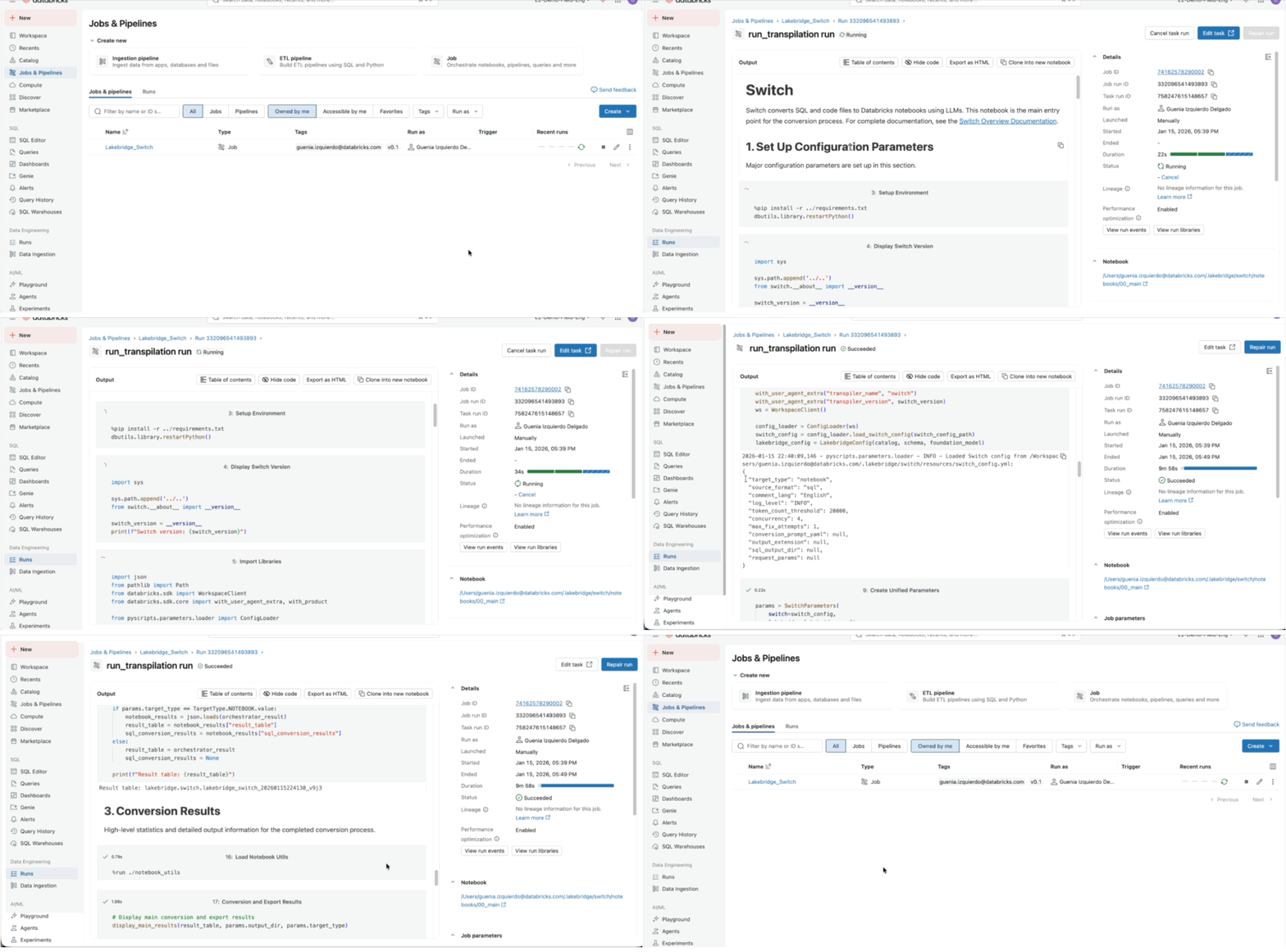
Lakebridge utilizes AI to translate proprietary SQL dialects — including T-SQL, Redshift, Teradata, Oracle, and Snowflake — into open, Databricks-compatible ANSI SQL. This LLM-driven approach successfully handles the complex SQL transformations and nested logic that often challenge traditional rule-based tools, significantly reducing the need for manual code rewrites.
Using the Databricks Assistant, you can also convert your source SQL to ANSI SQL directly in the Databricks notebook or the SQL editor. The new /migrate function automatically analyzes the source code, explains how it differs from ANSI SQL, and generates recommended conversions.
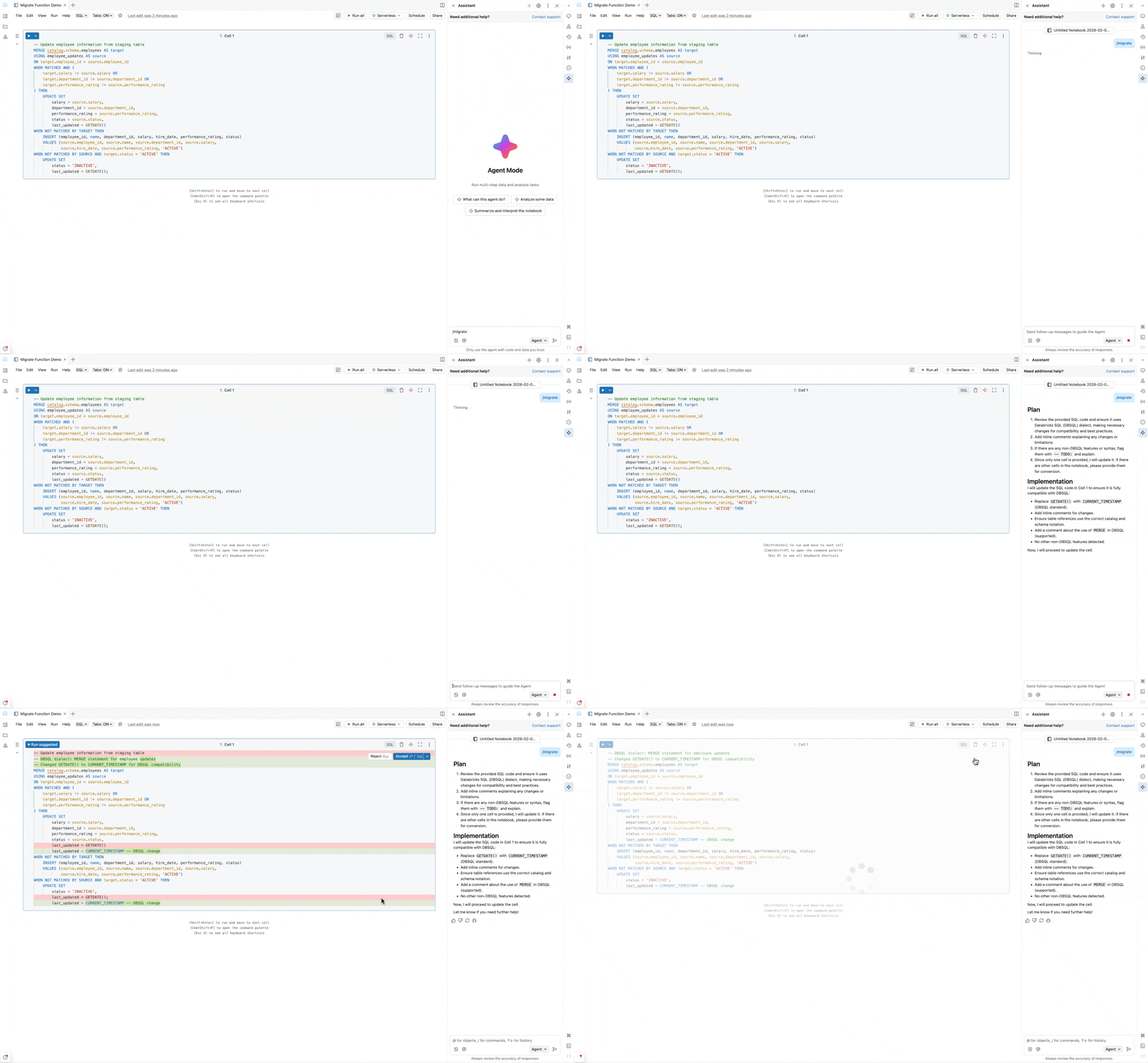
Together, these AI-assisted capabilities reduce manual rework and risk, surface issues earlier, and help migrations move forward at a faster, more predictable pace.
Guided user interface
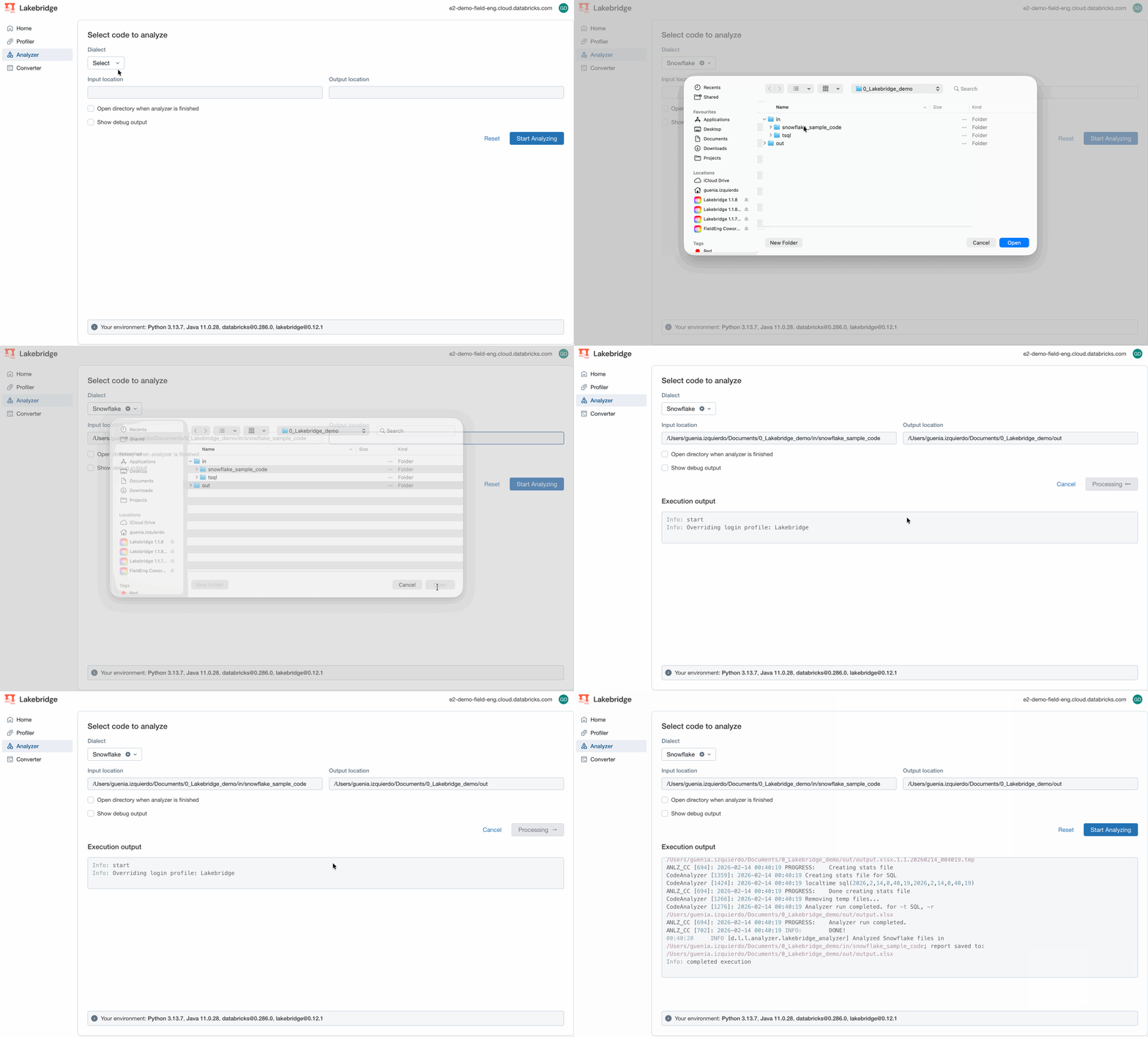
These Lakebridge features are now all packaged in a new desktop app. Users can follow a guided, visual experience to plan and execute a migration, making it easier for all users to get started with Lakebridge. Data engineers move faster, analysts and project managers gain clear visibility into scope, and teams align earlier on timelines and risk — resulting in less friction up front and faster time to value on Databricks.
Key new capabilities include:
- Guided setup with automated checks to validate system requirements before you start
- Secure, simplified workspace connectivity without editing configuration files
- Shared visibility so engineers, architects, and stakeholders can plan from the same data
- One-click analysis to profile source environments and generate assessment reports
Real-world success
By simplifying how teams assess, convert, and validate migrations, Lakebridge helps you modernize onto the Databricks Data + AI Platform with confidence. At Databricks, hundreds of customers have already seen the benefits of using Lakebridge to accelerate real-world migrations.
Because Lakebridge is freely available and open source, ~200 of our partners also leverage Lakebridge to deliver greater value to their customers without licensing barriers.
“Lakebridge is a foundational technology that makes migrations to the Lakehouse predictable and cost-effective. By automating complex dialect translations and ensuring full compatibility, it drastically reduces migration risk and accelerates the adoption of a modern data architecture.” —Prithvi Krishnappa, Practice Leader - Data & AI, Capgemini North America
What’s next?
Lakebridge helps teams modernize their data warehouse so they can consolidate data, scale analytics, and support AI on a single platform — without the risk and uncertainty that typically slow down migrations. Combined with Databricks’ open architecture, it delivers a fast, predictable path to a flexible data lakehouse without lock-in.
Lakebridge will continue expanding its AI-powered capabilities to handle more complex environments with even greater confidence. Upcoming releases will add more advanced assessment tools and enhanced SQL syntax validation. Watch for updates leading up to Data and AI Summit 2026.
Learn more
Whether you’re evaluating your options or are ready to start migrating, these resources can help you take the next step.
- Documentation: Dive deeper into the details of Lakebridge with our documentation
- eBook: Build your strategy with a copy of Transforming Legacy Data Warehouses
- Migration guides: Find specific guides for switching over from Microsoft SQL Server | Oracle | Snowflake | Redshift | Netezza | Teradata
- Tips and tricks: Read the Top 10 Tips for DBAs migrating to Databricks
Ready to get started? Lakebridge is available at no cost for Databricks customers and partners. Try the new capabilities to plan and run your migration, or connect with a Certified Databricks Migration Partner for hands-on support at any stage.
Get the latest posts in your inbox
Subscribe to our blog and get the latest posts delivered to your inbox.