What is a DNA Sequence?
The precise order of nucleotide bases (adenine, thymine, cytosine, guanine) in DNA encoding genetic instructions for organism development and function
- A DNA sequence is the ordered series of nucleotide bases in a DNA molecule that encodes genetic information for living organisms.
- Sequencing technologies read these bases at scale, producing large datasets that researchers analyze to study genes, traits and diseases.
- Databricks provides the scalable storage and compute needed to process DNA sequence data and support genomics and bioinformatics workloads.
What is a DNA Sequence?
The DNA sequence is the process of determining the exact sequence of nucleotides of DNA (deoxyribonucleic acid). Sequencing DNA the order of the four chemical building blocks - adenine, guanine, cytosine, and thymine also known as bases, occur within the DNA molecule. The first methods for sequencing DNA were developed in the middle 1970s by Fred Sanger, and by Walter Gilbert and Allan Maxam. The first DNA fragment that has been sequenced belonged to a virus named T4 bacteriophage that specifically infects the Escherichia coli bacteria. Since the completion of the Human Genome Project, a number of new methods were being developed for large-scale sequencing. The technological improvements and automation have reached a point where labs can sequence well over 100,000 billion bases per year. A number of new methods have been developed for large-scale sequencing; these new methods can target large numbers of short DNA fragments or even entire chromosomes.
The agentic AI playbook for the enterprise

DNA Sequencing Methods
There are two main types of DNA sequencing: 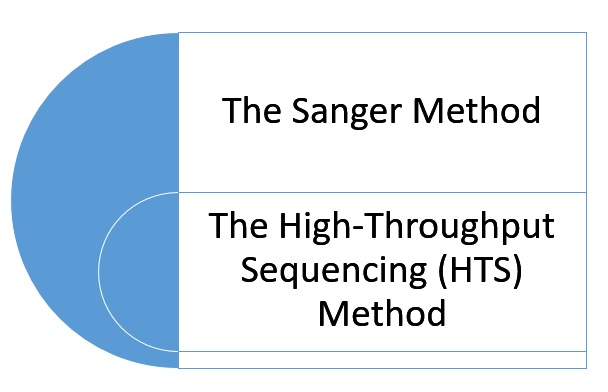
- The Sanger method, also known as dideoxy, which is the classical chain termination method. This method is still being used for determining the sequences of relatively long stretches of DNA, at low volumes. However, if a large number of molecules has to be quickly sequenced it will not be the best choice mainly due to its high costs and laborious work.
- The High-Throughput Sequencing (HTS) method also known as the Next-Generation Sequencing (NGS) technique. NGS is characterized by improved accuracy and speed, but also reduced manpower and cost.
The implementation of the High-Throughput Sequencing method has expanded the applications for genomics. DNA sequencing is now being used as an integral part of basic science, translational research, medical diagnostics, and forensics.
Additional Resources
Get the latest posts in your inbox
Subscribe to our blog and get the latest posts delivered to your inbox.