What is Genomics?
The study of genomes—DNA sequencing, assembly, annotation, and analysis—to understand genetic variation, evolution, disease mechanisms, and biology
- Genomics is the study of all of an organism's genes and how they interact, using large scale DNA sequencing data to understand biology, disease and variation across populations.
- Modern genomics generates massive datasets that require scalable storage and compute to align, process and analyze genomic sequences efficiently.
- Databricks helps genomics teams manage and analyze this data at scale so they can accelerate research, clinical insights and precision medicine.
Genomics is an area within genetics that concerns the sequencing and analysis of an organism's genome. Its main task is to determine the entire sequence of DNA or the composition of the atoms that make up the DNA and the chemical bonds between the DNA atoms. The field of genomics is interested in the genome as a whole structure; as a result, it can be defined as a study of the complete genetic material of an organism. Although DNA was first isolated in 1869, genomics has only started in the 1970s when the scientists determined the DNA sequence of simple organisms. The greatest breakthrough in the field of genomics occurred in 1995 when the entire genome sequence of a free-living organism, the Haemophilus influenza, was completed. The Human Genome Project was launched in 1990 with the aim to sequence all 3 billion letters of a human genome. Chromosome 22 was the first chromosome to be sequenced as a part of this project in 1999. The International Human Genome Sequencing Consortium published the first draft of the human genome in the journal Nature in February 2001 with the sequence of the entire genome's three billion base pairs some 90 percent complete. The full sequence was completed and published in April 2003. The evolving field of genomics generally includes several key research areas: 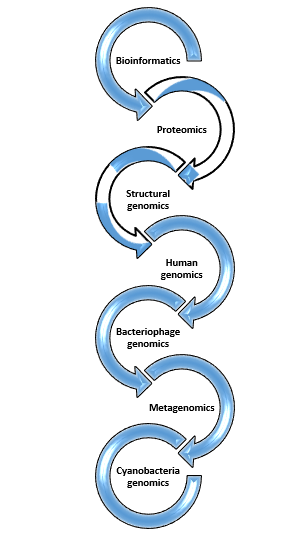
- Bioinformatics -is an interdisciplinary field that integrates computers, software tools, and databases for retrieving, analyzing and understanding of large amounts of biological information
- Proteomics - is a complex field of study focusing on the study of changes in protein expression patterns as related to diseases and environmental conditions.
- Structural genomics - is a field of genomics that involves the characterization of genome structures.
- Human genomics - As the name suggests, human genomics concentrates on studying the human genome sequence.
- Bacteriophage genomics - It refers to the study of bacteriophage genomes or genomics of viruses that infect bacteria. The scope of the study is to find an alternative treatment for those illnesses that have as a root cause an antibiotic-resistant bacteria.
- Metagenomics - It concentrates on the study of metagenomes or genetic material that is obtained from environmental samples
- Cyanobacteria genomics - This branch of genomics studies cyanobacteria, a phylum of bacteria that obtains its energy through photosynthesis.
- Pharmacogenomics - This field of genomic research is focused on the impact of genetic variation on a drug's efficacy and toxicity
Additional Resources
The agentic AI playbook for the enterprise

Get the latest posts in your inbox
Subscribe to our blog and get the latest posts delivered to your inbox.