What is Medallion Architecture?
Lakehouse design pattern organizing data into bronze (raw), silver (cleaned), and gold (aggregated) layers for progressive data quality refinement
Summary
- Medallion architecture is a data design pattern that organizes lakehouse data into Bronze, Silver and Gold layers to progressively improve data quality and structure.
- Bronze tables capture raw data, Silver tables clean and standardize it and Gold tables contain business level aggregates and features ready for analytics and machine learning.
- This layered approach promotes reuse, governance and performance while giving different teams clear entry points into shared data on the Databricks Lakehouse.
What is a medallion architecture?
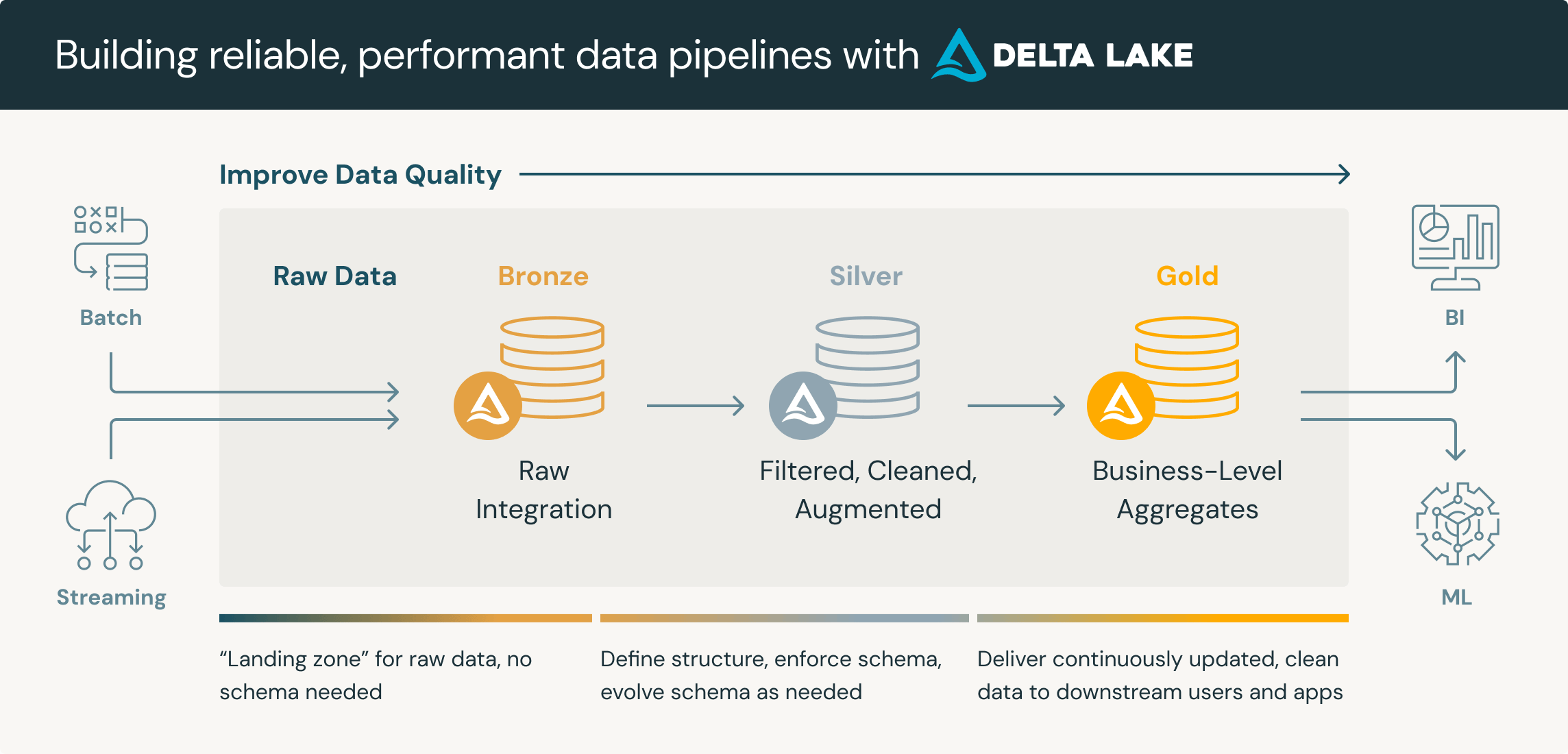
A medallion architecture is a data design pattern used to logically organize data in a lakehouse, with the goal of incrementally and progressively improving the structure and quality of data as it flows through each layer of the architecture (from Bronze ⇒ Silver ⇒ Gold layer tables). Medallion architectures are sometimes also referred to as "multi-hop" architectures.
How can you build data pipelines with a medallion architecture?
Databricks provides tools like Spark Declarative Pipelines that allow users to instantly build data pipelines with Bronze, Silver and Gold tables from just a few lines of code. And, with streaming tables and materialized views, users can create streaming Lakeflow pipelines built on Apache Spark™️ Structured Streaming that are incrementally refreshed and updated. For more details, see Databricks documentation on combining streaming tables and materialized views in a single pipeline.
What is the Bronze layer in a medallion architecture?
The Bronze layer is where we land all the data from external source systems. The table structures in this layer correspond to the source system table structures "as-is," along with any additional metadata columns that capture the load date/time, process ID, etc. The focus in this layer is quick Change Data Capture and the ability to provide an historical archive of source (cold storage), data lineage, auditability, reprocessing if needed without rereading the data from the source system.
What is the Silver layer in a medallion architecture?
In the Silver layer of the lakehouse, the data from the Bronze layer is matched, merged, conformed and cleansed ("just-enough") so that the Silver layer can provide an "Enterprise view" of all its key business entities, concepts and transactions. (e.g. master customers, stores, non-duplicated transactions and cross-reference tables).
The Silver layer brings the data from different sources into an Enterprise view and enables self-service analytics for ad-hoc reporting, advanced analytics and ML. It serves as a source for Departmental Analysts, Data Engineers and Data Scientists to further create projects and analysis to answer business problems via enterprise and departmental data projects in the Gold Layer.
In the lakehouse data engineering paradigm, typically the ELT methodology is followed vs. ETL - which means only minimal or "just-enough" transformations and data cleansing rules are applied while loading the Silver layer. Speed and agility to ingest and deliver the data in the data lake is prioritized, and a lot of project-specific complex transformations and business rules are applied while loading the data from the Silver to Gold layer. From a data modeling perspective, the Silver Layer has more 3rd-Normal Form like data models. Data Vault-like, write-performant data models can be used in this layer.
What is the Gold layer in a medallion architecture?
Data in the Gold layer of the lakehouse is typically organized in consumption-ready "project-specific" databases. The Gold layer is for reporting and uses more de-normalized and read-optimized data models with fewer joins. The final layer of data transformations and data quality rules are applied here. Final presentation layer of projects such as Customer Analytics, Product Quality Analytics, Inventory Analytics, Customer Segmentation, Product Recommendations, Marking/Sales Analytics etc. fit in this layer. We see a lot of Kimball style star schema-based data models or Inmon style Data marts fit in this Gold Layer of the lakehouse.
So you can see that the data is curated as it moves through the different layers of a lakehouse. In some cases, we also see that lot of Data Marts and EDWs from the traditional RDBMS technology stack are ingested into the lakehouse, so that for the first time Enterprises can do "pan-EDW" advanced analytics and ML - which was just not possible or too cost prohibitive to do on a traditional stack. (e.g. IoT/Manufacturing data is tied with Sales and Marketing data for defect analysis or health care genomics, EMR/HL7 clinical data markets are tied with financial claims data to create a Healthcare Data Lake for timely and improved patient care analytics.)
The agentic AI playbook for the enterprise

What are the benefits of a lakehouse architecture?
- Simple data model
- Easy to understand and implement
- Enables incremental ETL
- Can recreate your tables from raw data at any time
- ACID transactions, time travel
What is a lakehouse?
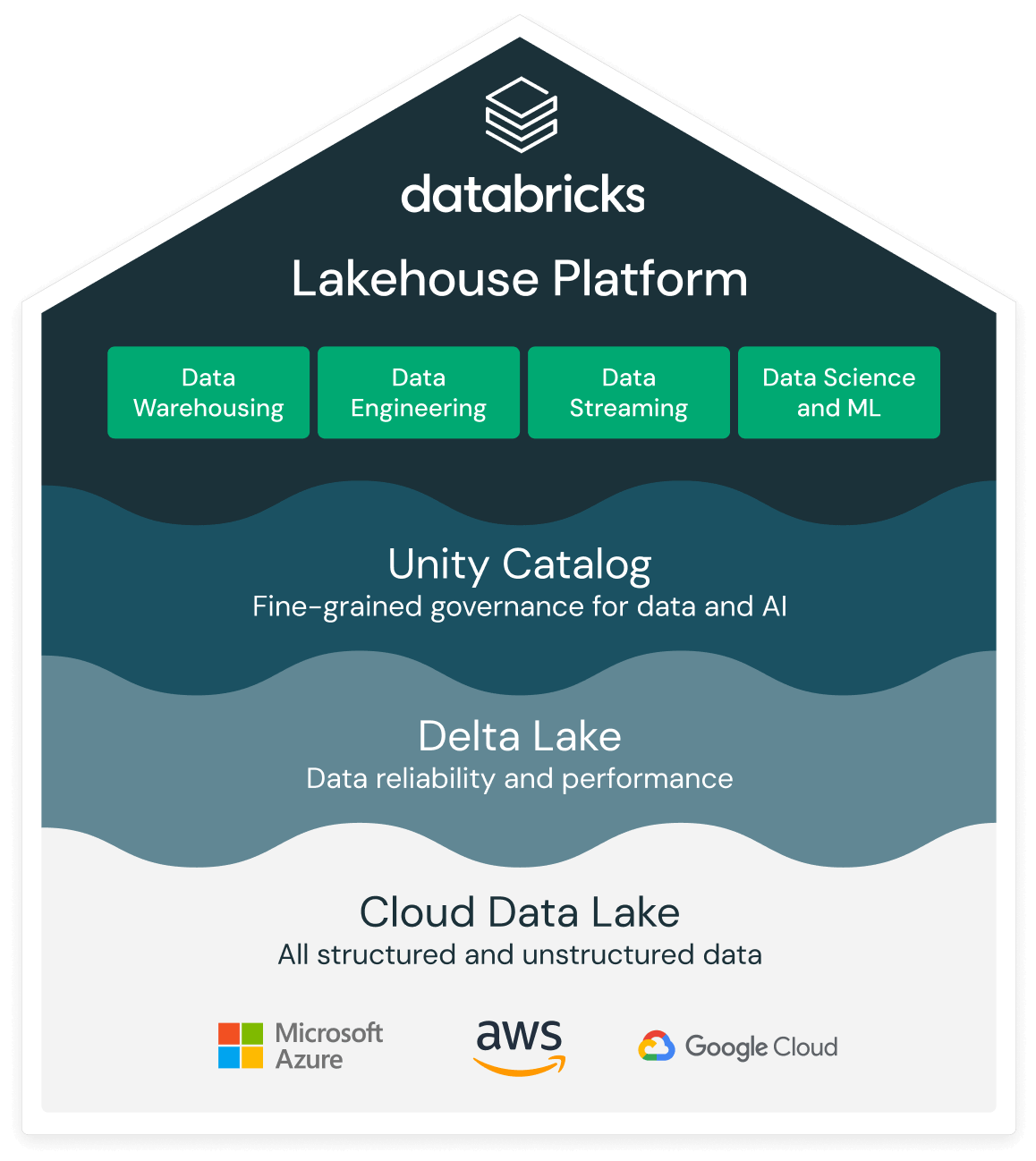
A lakehouse is a data platform architecture paradigm that combines the best features of data lakes and data warehouses. A modern lakehouse is a highly scalable and performant data platform hosting both raw and prepared data sets for quick business consumption and to drive advanced business insights and decisions. It breaks data silos and allows seamless, secure data access to authorized users across the enterprise on one platform.
Is medallion architecture compatible with a data mesh?
The Medallion architecture is compatible with the concept of a data mesh. Bronze and silver tables can be joined together in a "one-to-many" fashion, meaning that the data in a single upstream table could be used to generate multiple downstream tables.
[ Try Databricks for free today ]
Where can you find additional resources on medallion architecture?
- What is a Data Lakehouse?
- Data Lakehouse Platform by Databricks
- How Incremental ETL Makes Life Simpler With Data Lakes - Databricks Blog
- Simplify Your Medallion Architecture with Delta Lake's CDF Feature
Frequently Asked Questions
What's the difference between ETL and ELT when using a medallion architecture?
A medallion architecture typically follows an ELT (extract, load, transform) approach rather than traditional ETL. Only minimal, "just-enough" cleansing and standardization happens while data is loaded into the Silver layer, prioritizing speed and agility in getting data into the lake. The bulk of complex, project-specific transformations and business rules are applied later, when data moves from the Silver layer into the Gold layer.
Can medallion architecture work with streaming data, or is it only for batch processing?
Medallion architecture supports both batch and streaming data. Databricks lets you build streaming Lakeflow pipelines using streaming tables and materialized views built on Apache Spark Structured Streaming, which are incrementally refreshed and updated as new data arrives. Spark Declarative Pipelines can generate Bronze, Silver and Gold tables from just a few lines of code, whether the underlying data is streaming or batch.
How does the Bronze layer help with data governance and auditing?
The Bronze layer preserves raw source data "as-is," along with metadata columns such as load date/time and process ID, which supports change data capture, historical archiving and full data lineage. Because the original data is retained untouched, teams can reprocess it at any time without having to re-read it from the source system, which strengthens auditability. Tools like Unity Catalog can extend this further by tracking table and column lineage and storing change history across the layered architecture.
What industries commonly use medallion architecture in real-world data platforms?
Medallion architecture is applied broadly across industries wherever raw data needs to be progressively refined for analytics and machine learning. The article notes examples such as tying IoT and manufacturing data to sales and marketing data for defect analysis, and combining healthcare genomics or EMR/HL7 clinical data with financial claims data to build healthcare data lakes for patient care analytics. It's also commonly used to consolidate traditional EDWs and data marts so enterprises can run "pan-EDW" advanced analytics that weren't previously cost-effective on legacy stacks.
How does the Gold layer relate to traditional data warehouse modeling like star schemas?
The Gold layer often uses the same denormalized, read-optimized modeling techniques found in traditional data warehousing, including Kimball-style star schemas and Inmon-style data marts. This layer is organized into consumption-ready, project-specific databases for reporting, with final data quality rules and transformations applied. Typical Gold layer outputs include presentation-ready datasets for use cases like customer analytics, product quality analytics, customer segmentation and sales analytics.