Announcing General Availability and Open Sourcing of Unity Catalog Business Semantics
Open and Unified Business Semantics for BI and AI
by Can Efeoglu, Sachin Thakur, Richard Tomlinson, Justin Talbot, Daniel Rosenthal and Jasmeet Jaggi
- Unity Catalog Business Semantics is now GA. Define governed metrics, dimensions, and rules once at the data layer so every dashboard, SQL query, notebook, and AI agent works from the same trusted definitions.
- The core implementation is being open sourced in Apache Spark, extending business semantics beyond a single platform and reinforcing a commitment to openness and interoperability.
- Metric Views deliver consistent business KPIs with lineage, permissions, and performance controls, along with semantic metadata like display names, formats, and synonyms.
As data and AI become central to every enterprise, a consistent understanding of business concepts is essential. Analysts, engineers, executives and now AI agents often interpret the same data differently, resulting in metric drift, conflicting reports and declining trust.
For years, these business concepts lived inside BI tools and dashboards. In the era of agentic AI, where agents reason over data and act autonomously, fragmented definitions do not just create confusion, they scale it. Enterprises need a unified semantic foundation defined at the core of the data and AI platform, governed once and applied everywhere. And it must be open. Business semantics define how organizations measure revenue, growth, customer value and risk. These definitions are strategic assets that cannot be locked into proprietary systems or confined to a single application layer.
Today, we are changing this with the General Availability of Unity Catalog Business Semantics, a unified and open semantic foundation that delivers consistent, trusted context across BI dashboards, developer workflows and AI agents. To make this foundation truly portable, we are also open sourcing its core implementation in Apache Spark, with support in Unity Catalog OSS v0.5 coming soon.
Why traditional approaches to business semantics fall short
Customers have long used BI tool-specific semantic layers that deliver consistency within that tool, but that approach has limitations:
- Proprietary and fragmented: In a multi-tool, multi-agent world, each BI model speaks its own language. As a result, definitions get locked inside dashboards, models, and spreadsheets, making it nearly impossible to govern, enforce access policies, or trace lineage across the organization.
- Definitions too far downstream: Because these layers sit at the presentation tier rather than at the data foundation, teams repeatedly redefine the same metrics for different dashboards and reports. This downstream approach makes semantics brittle, inconsistent, and hard to scale.
- Inflexible for AI: Traditional layers rely on heavy, up-front modeling that can’t keep pace with fast-changing business questions or the open-ended prompts of AI agents. Every change requires expert intervention, slowing response and eroding trust.
These limitations have long frustrated data and AI teams. In today’s AI-driven landscape, where agility and trusted answers are non-negotiable, they’ve become a critical barrier to progress.
Unity Catalog Business Semantics unifies and governs semantics at the core of the Databricks platform
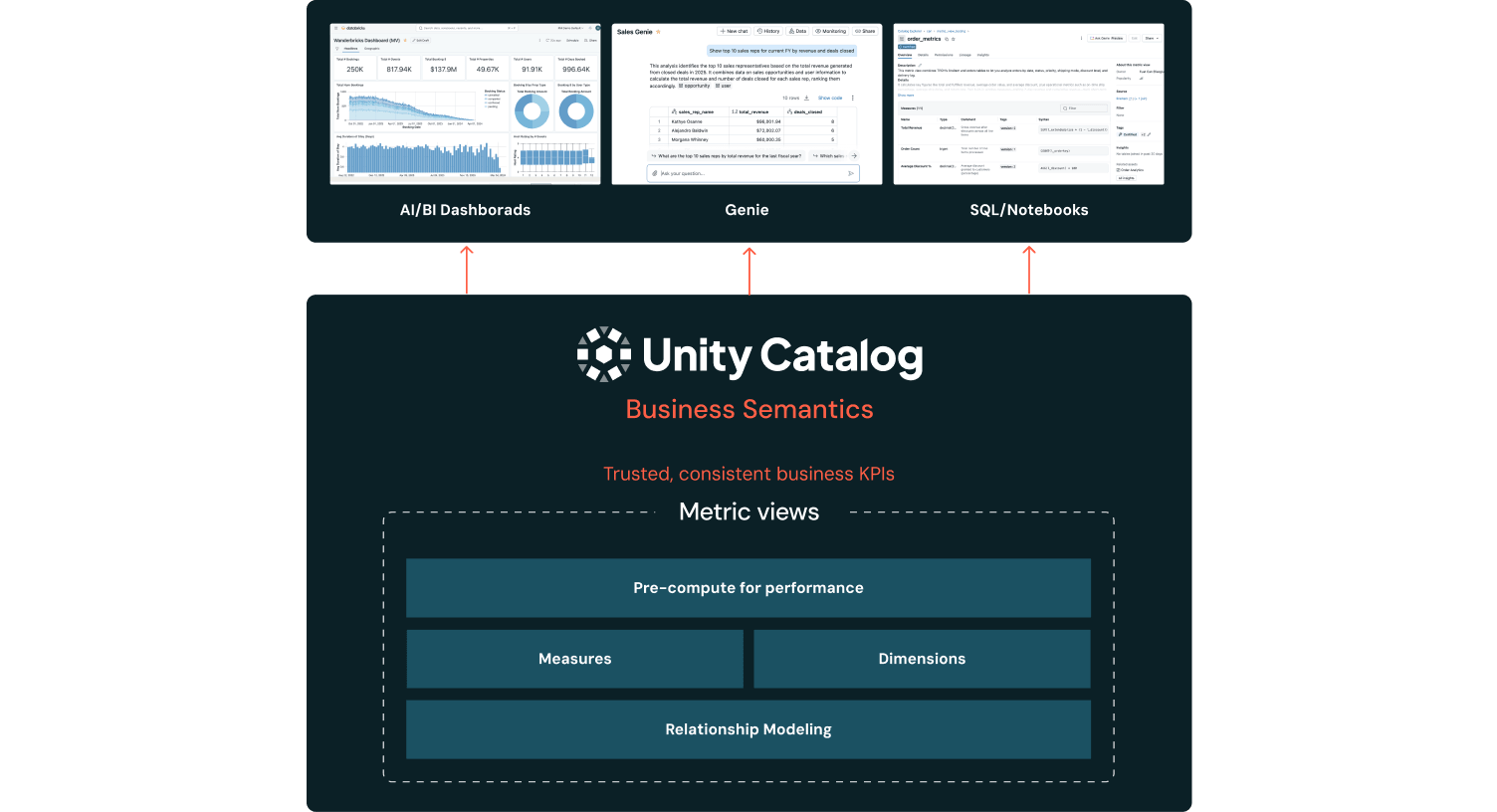
Unity Catalog Business Semantics represents a fundamental shift as semantics are now unified and governed at the core of the Databricks Data + AI Platform. Built directly into Unity Catalog, they extend the same governance, security, and lineage you already rely on and make those definitions available everywhere you work.
This approach delivers three key benefits:
- Open and reusable: Accessed through SQL and APIs, business semantics can be queried across dashboards, notebooks, applications and AI agents. Stored in an open format, they are fully portable and not confined to proprietary tools.
- Governed at the core: Inherits the same governance policies as the underlying data. This upstream approach ensures consistent usage, governance, lineage, and access control to provide a single source of truth for both data and business meaning.
- Designed for AI: Rich semantic metadata provides the context agents need to answer new questions accurately and adapt as business concepts evolve, without heavy upfront modeling
Metric Views helped us standardize our metrics and dramatically cut down the business workload of reconciling numbers. Queries are significantly faster, in some cases up to 10x, dashboards are easier to build, and we’ve seen meaningful improvements in Genie’s accuracy thanks to more consistent, pre-aggregated data. —Pedro Alves, Data Manager, Tech Growth, iFood
Unity Catalog Business Semantics presents an exciting opportunity to establish consistency, trust and control in how business metrics are defined and consumed across Zalando. It is a promising contribution to aligned, data-driven decisions across our BI dashboards, notebooks and other tools. —Timur Yüre, Engineering Manager, Zalando
Databricks open sources Metric Views in Apache Spark and joins the Open Semantic Interchange initiative
One of the key goals with Unity Catalog Business Semantics is to ensure customers can define business meaning in a way that is open, portable, and designed to work across their existing ecosystem, without lock-in. Semantic definitions should integrate seamlessly with BI tools, SQL workloads, and AI agents, and remain durable as platforms and consumption patterns evolve.
To deliver on this, we are open sourcing the core Metric View implementation in Apache Spark OSS, targeting the upcoming Apache Spark release (You can follow the progress in the SPARK-54119), with support in Unity Catalog OSS v0.5 coming soon. This enables customers to define business semantics using standard SQL in open systems, governed at the data foundation rather than embedded in downstream tools, and reused consistently across analytics and AI surfaces.
Databricks also supports broader industry efforts to improve interoperability around business semantics. The company has joined the Apache Ossie (incubating) initiative and is actively contributing to it. We view initiatives like these as an important step toward ecosystem alignment and will contribute accordingly, while continuing to focus on building an open, governed semantic foundation that customers can trust at scale.
What's new in the Unity Catalog Business Semantics GA release?
Metric Views provide trusted, consistent KPI definitions
At the heart of this GA release are Metric Views, which establish trusted, consistent definitions of business KPIs with semantic metadata like display names, formats, and synonyms that help both humans and AI interpret and apply those definitions with confidence. Metric Views let you define data mappings, measures, and dimensions centrally in SQL and govern them directly in Unity Catalog. Definitions then become portable across every surface: AI/BI Dashboards, Genie, Notebooks, SQL applications, and third-party tools connected to Databricks. Because each metric is defined declaratively, the engine compiles and executes the underlying SQL deterministically at query time, ensuring that every consumer, whether human or AI agent, gets the same result from the same definition regardless of how or where they access it.
What’s new:
Materialization for query performance: Unity Catalog Business Semantics pairs governed definitions with performance at scale through materializations. Rather than forcing teams to decide which aggregation table to hit, duplicate logic for different performance tiers, or build separate pipelines for different workloads, the semantic layer handles performance automatically. Here's how:
- Automatic pre-aggregation: When you define materializations for a metric, the platform maintains optimized, pre-aggregated results without manual intervention
- Incremental refresh: Materialized results stay current through incremental updates, so metrics never go stale and full recomputation is rarely needed
- Intelligent query rewriting: At query time, the engine rewrites queries to leverage the best available materialization
- Transparent routing: Users query metrics the same way they always do, while the system routes each request to the fastest path behind the scenes
Materialization is in Preview and to learn more, please refer to the docs (AWS, Azure, GCP).
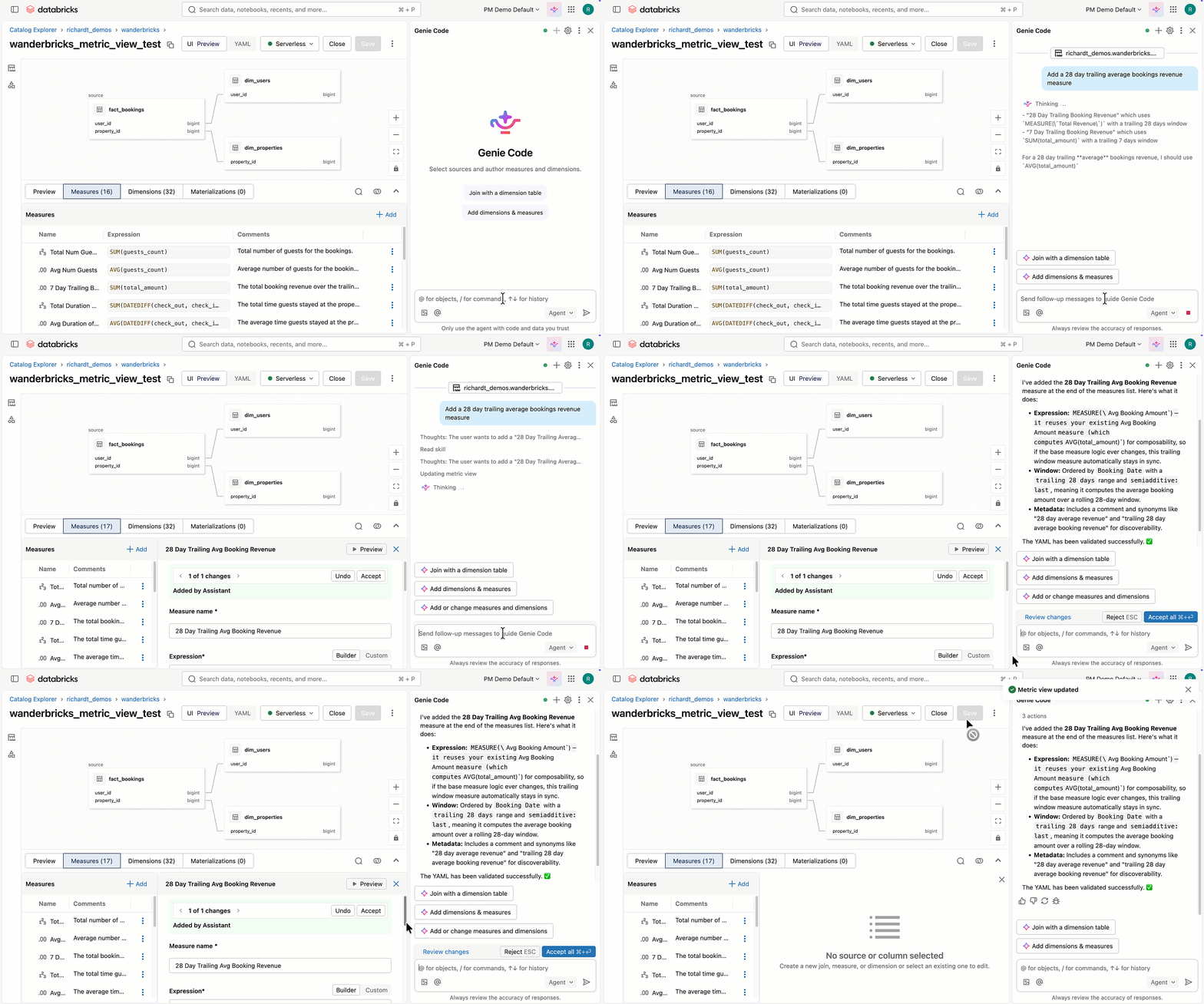
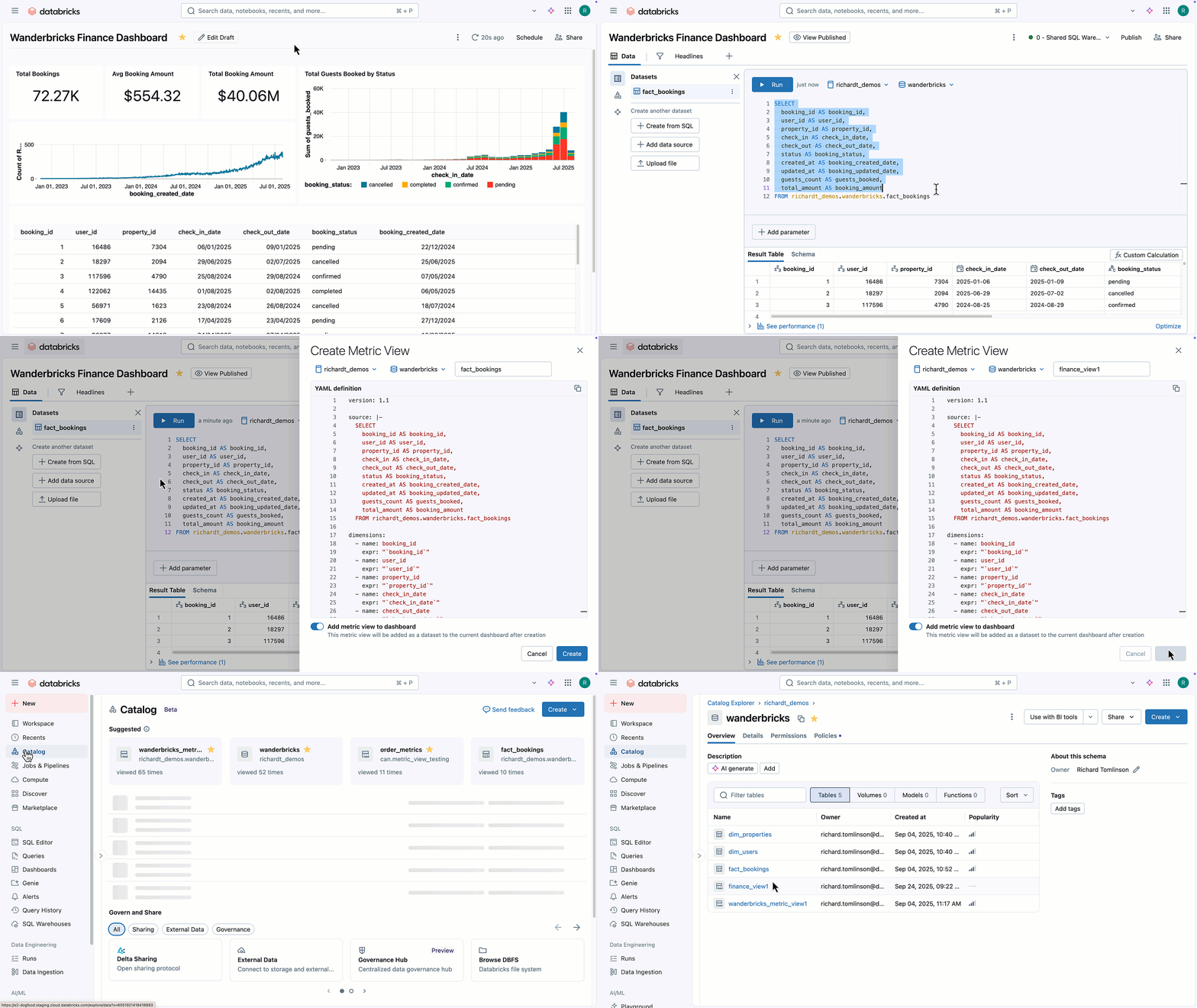
Author with new UI and agentic AI experiences: Now, in Public Preview, you can create and manage Metric Views through a new point-and-click UI in Unity Catalog Explorer, making semantic modeling accessible to both technical and non-technical users without requiring complex SQL or deep data modeling expertise. The UI lets you define relationships between tables visually, chart metrics inline, and test everything end-to-end before publishing, all without leaving the browser. To learn more about UI based authoring, please refer to the docs (AWS, Azure, GCP).
Genie Code further accelerates the authoring process by bringing agentic AI directly into the authoring workflow. Rather than starting from a blank page, Genie Code can:
- Bootstrap semantic models faster: Suggest measures, dimensions, synonyms, and documentation so teams get started in minutes instead of weeks
- Refine and refactor: Identify issues in existing definitions and recommend improvements as business logic evolves
- Validate changes: Test proposed edits against real data so you can catch errors before they propagate
- Enable granular change management: Review and approve individual metric changes with full visibility into what shifted and why
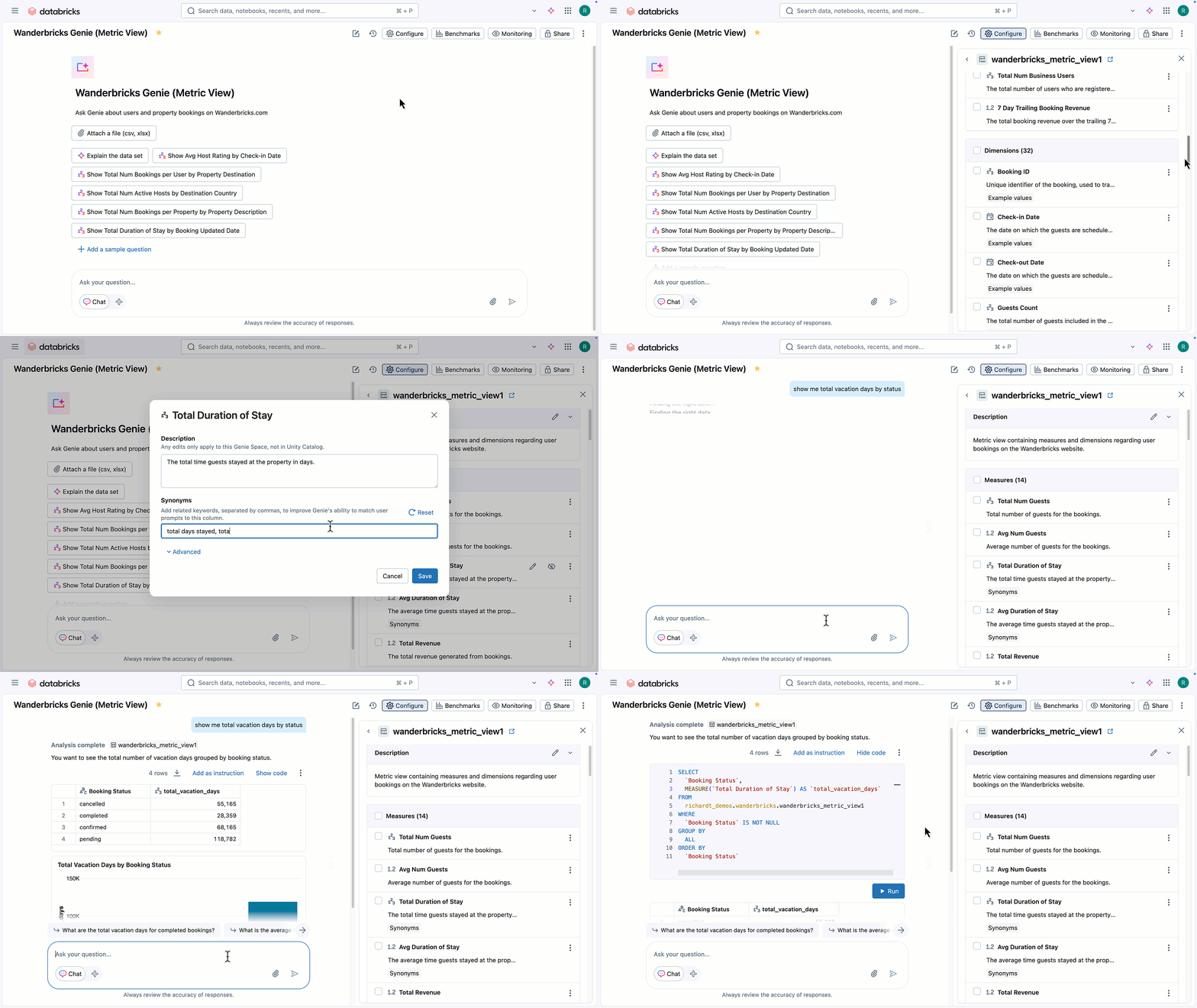
Metric Views go beyond defining KPIs. Each metric view carries rich semantic metadata, display names, formats, and synonyms, that makes it understandable and usable by both humans and AI, ensuring consistent presentation across dashboards and conversational UIs while helping AI interpret business terminology and natural language queries correctly.
How does Unity Catalog Business Semantics power AI/BI dashboards and Genie?
With this GA release, AI/BI Dashboards and Genie are now fully integrated with Unity Catalog Business Semantics. In practice, this unlocks three key benefits:
In practice, this unlocks three key benefits:
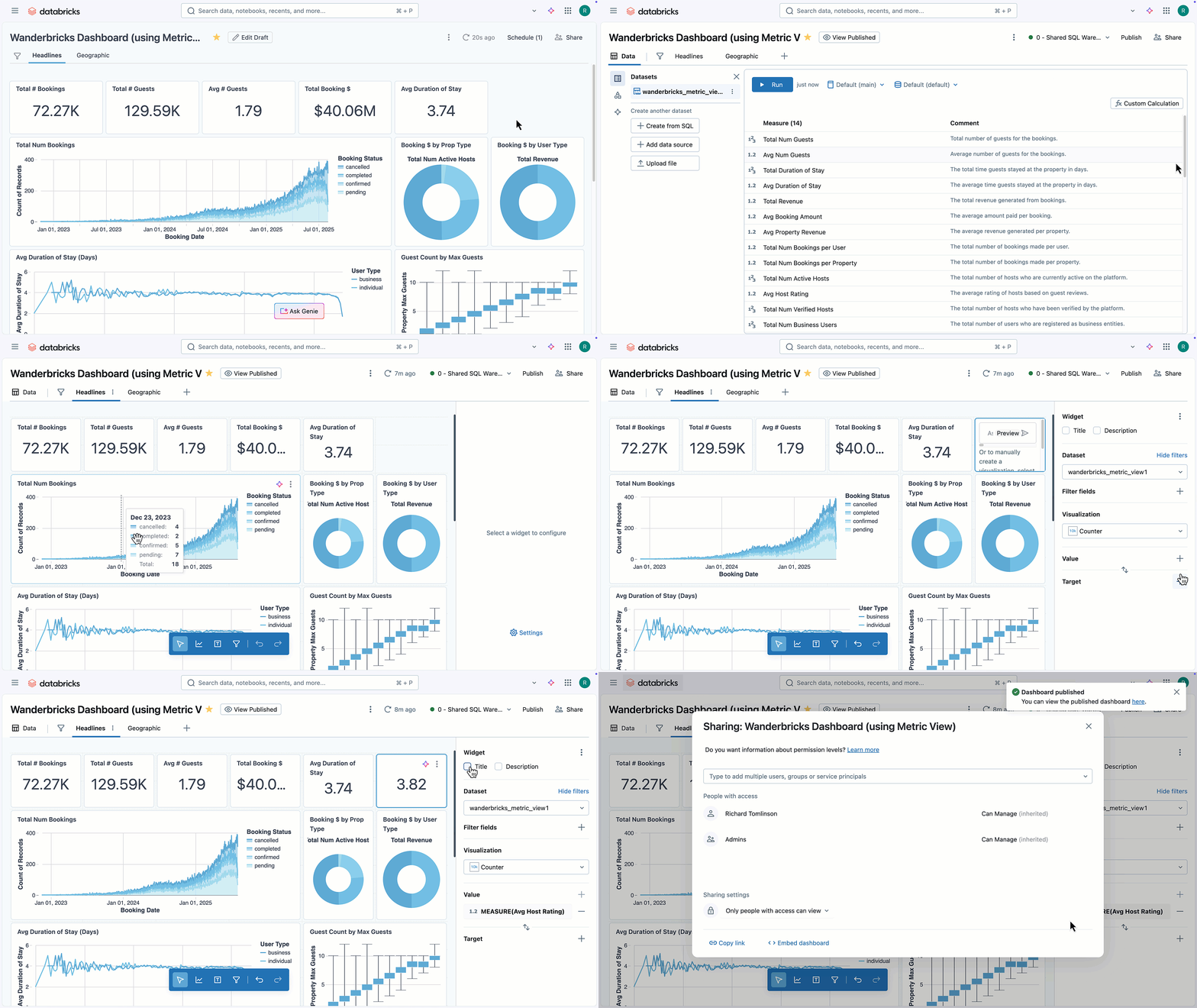
- AI/BI Dashboards powered by governed metrics: You can now build dashboards directly on Metric Views in Unity Catalog. Every visual, filter, drill-through, and comparison uses the same certified set of measures and dimensions, ensuring consistent numbers across teams and tools.
- Genie grounded in your business language: Genie spaces can be created directly on top of Metric Views, which means every natural-language query Genie answers is grounded in governed, deterministic definitions, not inferred logic. Because Metric Views are compiled into logical queries at runtime, users always get correct, consistent results. Genie is no longer hallucinating metrics; it's resolving them from a single source of truth.
- Promote dashboard logic to your semantic layer: When creating a new AI/BI Dashboard without an existing Metric View, any table joins, filters, or calculated fields you build can now be promoted to a new Metric View in Unity Catalog with a single action. It instantly becomes part of your organization's semantic layer, available across Genie, SQL, notebooks, and external BI tools. Plus, your dashboard will automatically benefit from Metric View materialization, significantly improving the performance of its underlying queries.
Which partner tools integrate with Unity Catalog Business Semantics?
A strong semantic foundation becomes even more valuable when it travels beyond a single platform. That’s why we work closely with a rich ecosystem of technology partners who integrate directly with Unity Catalog Business Semantics.
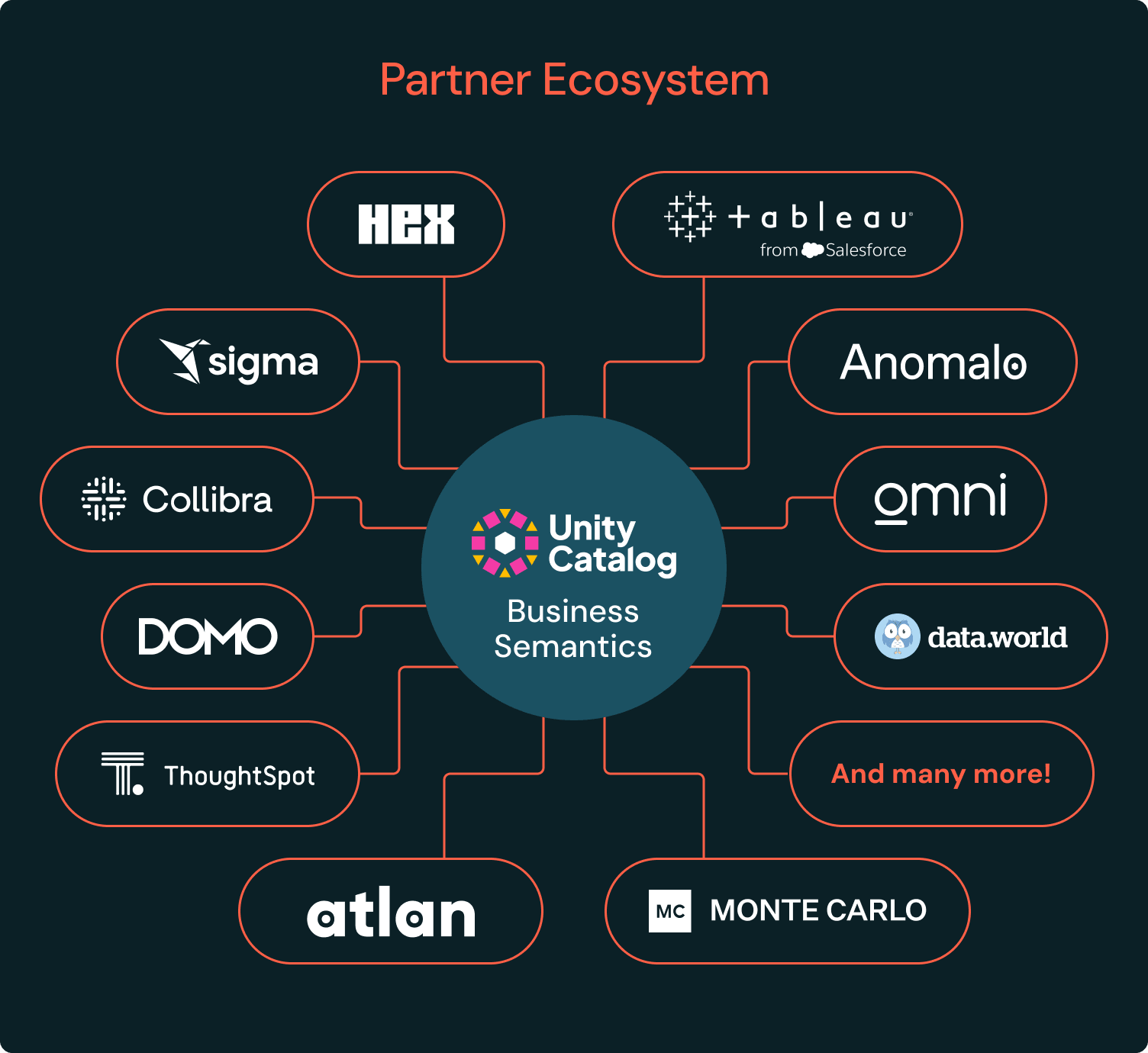
Tableau: Tableau plans to add support for delegated semantics from external metric providers, including Databricks Unity Catalog Business Semantics, within its relationship data model. This will ensure analysts can trust that metrics are consistently defined and accurately aggregated by the underlying semantic layer. The integration is expected in late 2026.
Tableau is excited to bring Unity Catalog Business Semantics into our relationship data model, giving analysts and organizations the ability to define metrics and metadata once and have Tableau automatically apply the right semantics for consistent, trustworthy insights. —Nicolas Brisoux, Sr. Director Product Management, Tableau
Sigma Computing: Sigma integrates directly with Databricks Unity Catalog Business Semantics by querying Metric Views in real-time ensuring the most current definitions are instantly reflected without data movement. This architecture allows Sigma to function as a transparent extension of your Lakehouse, strictly inheriting Unity Catalog’s security and governance protocols at the point of execution
At Sigma, we are working hard to integrate with Unity Catalog Business Semantics because it lets our customers pair Sigma’s spreadsheet-like experience with governed business definitions, ensuring fast, consistent, and trusted analytics for everyone. —Jordan Stein, Product Manager, Sigma
ThoughtSpot: Later this year, ThoughtSpot will add native support for Unity Catalog Metric Views, letting Spotter users instantly query governed Databricks metrics in natural language. This eliminates custom SQL and gives organizations flexible, accurate, and fast access to trusted business metrics across their data stack.
ThoughtSpot is thrilled to deepen our partnership with Databricks through Unity Catalog Business Semantics, giving customers much more flexibility in how and where they manage their business semantics. —Francois Lopitaux, SVP of Product, ThoughtSpot
- Hex: Unity Catalog Metric Views are now fully integrated into Hex. Users can browse Metric Views directly from their Databricks connections, query them with SQL in Hex notebooks, and build data apps backed by governed definitions. This makes it easier to go from exploration to production apps without redefining metrics.
With Databricks Unity Catalog Metric Views in Hex, teams work from trusted, governed metrics -reducing inconsistencies and moving faster with reliable insights. —Armin Efendic, Partner Engineer, Hex
Omni: With Omni, teams can analyze Metric Views through familiar experiences such as spreadsheets, SQL, or AI-driven chat. Omni also supports two-way integration, so updates made in Omni can be pushed back into Unity Catalog, keeping definitions consistent across the enterprise. This allows both data teams and business experts to contribute directly to the semantic model.
Grounding AI in business context is the only way to make it reliable. Our integration with Unity Catalog Metrics Views brings governed definitions into every interface -AI, spreadsheets, dashboards, and SQL. With two-way sync between Omni and Databricks, teams can define and update metrics in either system while keeping everything aligned. That consistency helps customers scale self-service, accelerate AI adoption, and power trustworthy customer-facing data products. —Jamie Davidson, Co-founder, Omni
Atlan: Atlan’s native integration with UC Metrics brings your most critical metrics directly into the Atlan Context Graph, tying them to lineage, owners, and business definitions without adding any new permissions overhead. This gives teams a single, trusted view of metrics in the flow of work, unlocking faster troubleshooting, better decision-making, and AI-ready data at scale.
Metrics are the pulse of every enterprise's Data & AI platform. By bringing UC Metrics into Atlan's Context Graph-with lineage, business context, and zero additional permissions-our customers gain operational intelligence that was previously out of reach. This is a meaningful step toward AI-ready data at scale. —Chandru, Product Leader, Atlan
Monte Carlo: Monte Carlo now supports Metric Views in Unity Catalog, giving you end-to-end observability across your standardized business metrics and the pipelines that power them
Reliable data and AI start with governed business metrics. Unity Catalog Metrics makes it easier to standardize KPIs at scale, and with Monte Carlo, data leaders can trust those insights to drive real business impact. —Lior Gavish, Co-founder and CTO, Monte Carlo
Collibra: Collibra brings trusted visibility into your Databricks metrics so both humans and AI agents can easily discover and use them for business decisions. The enhanced integration improves metric visualization, lets Collibra-approved metrics flow directly into Databricks, and adds bi-directional syncing to ensure consistent, reliable metrics across your data estate.
Governed, consistent metrics are required for AI agents and data users to understand, trust and automate workflows. Our joint customers continue to want close collaboration between Databricks and Collibra. —Tom Dejonghe, VP, Product Management, Data Governance, Collibra
Domo: Now integrates with Unity Catalog Metric Views, enabling governed Databricks metrics to flow directly into Domo’s dashboards, analytics, and AI-powered workflows. This reduces duplication, strengthens governance, and speeds time-to-insight on trusted KPIs.
Integrating Databricks’ governed metrics with Domo helps customers reduce duplication, improve governance, and accelerate insight on trusted KPIs. —Matthew Payne, VP Engineering, Domo
Anomalo: Anomalo joins as a launch partner for Unity Catalog Governed Metrics, pairing Databricks’ unified semantic layer with Anomalo’s automated metric monitoring. This integration helps enterprises detect drift and data quality issues early, ensuring accurate, trusted metrics for critical decisions.
By combining Databricks’ unified semantic layer with Anomalo’s metric monitoring, we help customers detect drift early and keep their metrics accurate and trusted at scale. —Amy Reams,Vice President of Business Development and Marketing, Anomalo
Together, these and upcoming integrations ensure consistent, governed semantics flow across the broader analytics and AI ecosystem, reaching far beyond Databricks
Getting started with Unity Catalog Business Semantics
We're incredibly excited about this launch. With semantics now a core part of your data platform, enterprise context flows everywhere, from dashboards and AI agents to notebooks and external BI tools, eliminating metric silos, vendor lock-in, and inconsistencies across tools. Built on an open foundation, your semantic layer works everywhere your data does.
Explore the documentation (AWS, Azure, GCP) for a detailed guide on how to get started with defining business semantics, controlling permissions and various consumption methods.
Explore product demos to see business semantics in action with AI/BI dashboards and Genie spaces
- Unity Catalog Metric Views Overview
- Surfacing Metric Views in AI/BI
- Querying Metric Views from a SQL Editor
Frequently Asked Questions
How do Metric Views make sure everyone gets the same answer for a metric?
Metric Views compile each metric definition into deterministic SQL that the engine executes the same way every time, regardless of which tool or agent issues the query. Because the underlying logic is defined once in Unity Catalog rather than recreated in each BI tool, dashboards, notebooks, SQL applications, and AI agents like Genie all resolve to the identical measure and dimension logic. This removes the need for manual reconciliation between teams that previously built the same metric differently in separate systems.
Can I convert an existing AI/BI dashboard's logic into a governed Metric View?
Yes, when you build a new AI/BI Dashboard without an existing Metric View, any joins, filters, or calculated fields you create can be promoted into a Metric View with a single action. That Metric View then becomes part of the organization's semantic layer, available to Genie, SQL, notebooks, and external BI tools. Promoted dashboards also automatically benefit from Metric View materialization, improving the performance of their underlying queries.
Is Metric View materialization available now, or is it still in preview?
Materialization is currently in Preview as part of the Unity Catalog Business Semantics GA release. When enabled, it automatically maintains pre-aggregated results, refreshes them incrementally, and rewrites queries at runtime to route each request to the fastest available materialization. Users continue to query metrics the same way they always have, regardless of whether materialization is active behind the scenes.
Do all the partner integrations work the same way, or can some of them write metrics back into Unity Catalog?
No, most partner integrations read governed Metric View definitions directly, while a few support writing changes back into Unity Catalog. Sigma Computing, for instance, queries Metric Views in real time without moving data, while Omni and Collibra both support bi-directional syncing so metric definitions stay aligned across systems. This means the depth of integration varies by partner, ranging from read-only querying to full two-way synchronization.
How should I get started defining Metric Views for my own data?
Start by building or validating a gold-layer schema for your core business tables, then define Metric Views for a handful of high-priority KPIs using either SQL or the point-and-click UI in Unity Catalog Explorer. From there, enable materialization on your highest-traffic metrics and connect dashboards or Genie spaces to monitor the results. Databricks' Metric Views documentation walks through defining semantics, setting permissions, and consumption options in detail.
Get the latest posts in your inbox
Subscribe to our blog and get the latest posts delivered to your inbox.