

Raiffeisen Bank International (RBI) is one of the largest banking groups in Central and Eastern Europe, operating a highly federated network of banks across multiple countries and regulatory environments. With roots dating back more than a century, RBI supports retail, corporate, and institutional customers while maintaining some of the most stringent requirements in the financial sector for security, governance, and auditability.
To sustain innovation at scale—and meet rising regulatory, performance, and cost pressures—RBI set out to modernize how data is accessed, governed, and analyzed across the group.
From fragmented warehouses to a standardized analytics foundation
RBI’s journey to Databricks SQL began with a highly fragmented analytics environment shaped by decades of organic growth. Different banks and departments relied on a mix of on-premises and cloud systems—each with its own SQL dialects, access controls, and operational models. Collaboration across teams was difficult, code reuse was limited, and there was no consistent way to govern or audit data usage at a group level. As George Moldovan explained, “In many large organizations, teams develop their own SQL conventions and systems over time. This can lead to a patchwork of approaches. For RBI, these weren’t sufficiently strong, unified, or modern enough to guide everyone effectively within the realities of data- and AI-driven transformations in the last years.” Rather than attempting a risky “big bang” migration, RBI took a phased, highly controlled approach. Legacy platforms and Databricks ran in parallel while users were onboarded gradually, results were validated, and production workloads were protected. The goal was not speed for its own sake, but trust and continuity. Moldovan was clear about where the real effort lay: “Migration is not a technical problem—it’s onboarding, governance, and convincing people that the platform is safe and reliable.” By prioritizing change management and user confidence, RBI successfully established Databricks SQL as a shared analytics foundation across the group.
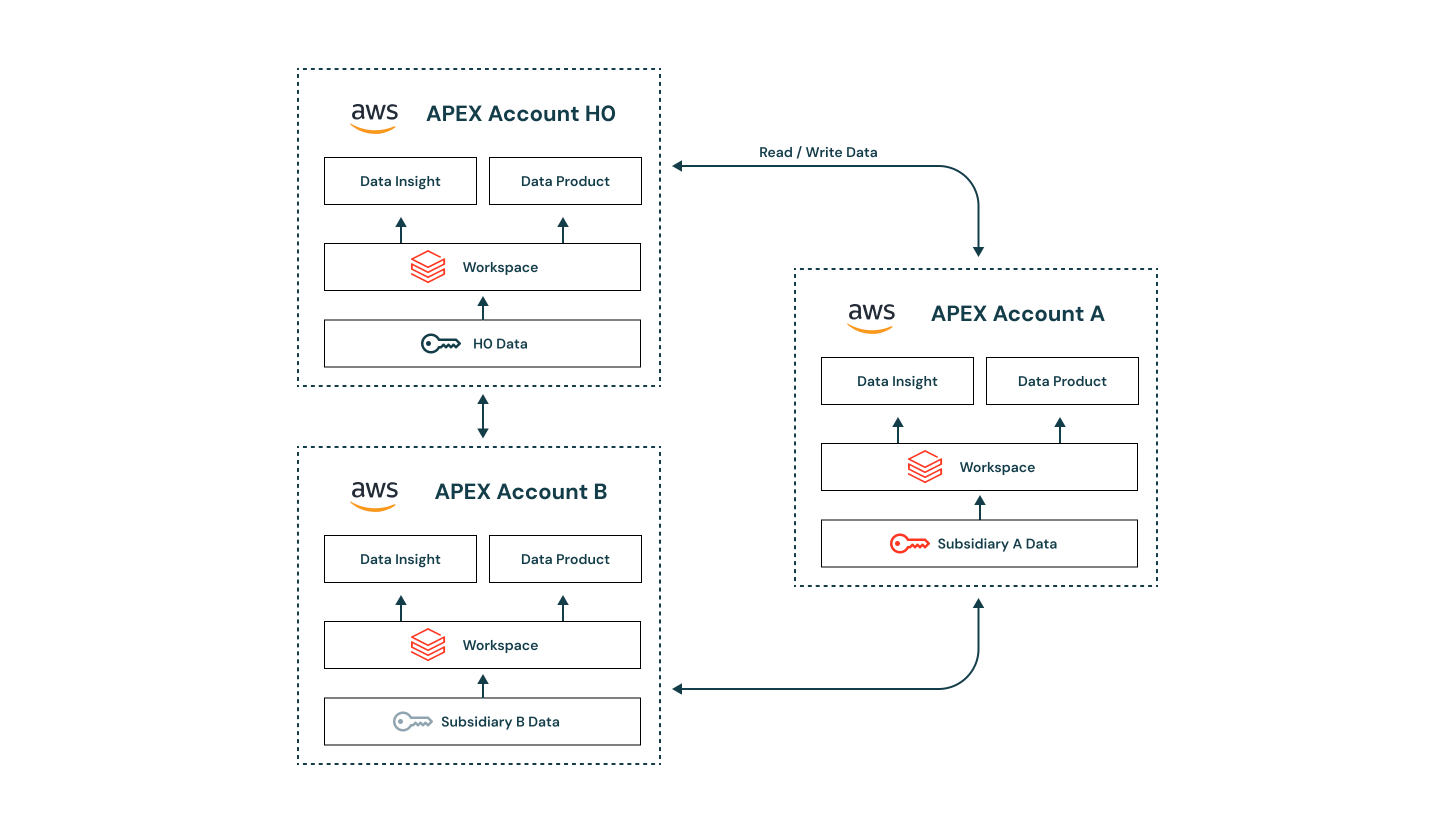
The decentralized platform – called APEX within RBI, and which integrates Databricks - provides ownership and control, enables local governance, and provides enhanced security and privacy by localizing the data, its users and its lifecycle.
Orders-of-magnitude performance at enterprise scale
Once workloads began running on Databricks SQL, performance improvements were immediate and transformative. Queries that had previously constrained analytics due to long runtimes became interactive, fundamentally changing how teams explored and used data. “In one extreme case, we had queries that were taking 30 days within our legacy infrastructure, and with Databricks SQL, we reduced them to about 12 minutes,” said Moldovan. “Average workloads now run three to four times faster compared to our previous cloud solution, enabling analysts to ask more complex questions without worrying about execution limits.”
Elastic compute plays a key role in this shift. Teams can scale resources on demand for large analytical jobs, rather than being bound by fixed on-premises or cloud capacity. This flexibility allows RBI to support hundreds of concurrent users across risk, compliance, finance, and retail analytics—without degrading performance. The result is not just faster queries, but a broader set of use cases that teams are willing and able to tackle.
Lower TCO through architecture, not cost controls
RBI’s cost improvements came from architectural simplification rather than aggressive restrictions on usage. By consolidating analytics onto Databricks SQL and serving BI workloads directly from the platform, the bank significantly reduced unnecessary data movement—historically one of the largest cost drivers in cloud analytics. Moldovan noted that this outcome challenged assumptions internally: “What we managed to achieve with Databricks was actually cheaper than the data lake we developed previously in-house, because a lot of functionality already existed.”
Automated cluster shutdowns, centralized operations, and transparent cost visibility further reduced waste. RBI built its own internal cost-monitoring and forecasting platform on Databricks, enabling teams to track usage by warehouse, user, and workload. This approach enables the bank to scale analytics adoption while keeping the total cost of ownership predictable and manageable.
Governance, compliance, and openness—built for European banking
For a European banking group, governance and compliance are non-negotiable. Databricks SQL provides centralized access controls, audit logs, and lineage capabilities that meet stringent regulatory requirements while still supporting self-service analytics. “There is no comparable platform in the bank—or certainly commercial one—that works at this scale with the level of auditing and governance Databricks provides for us,” Moldovan said.
Equally important is Databricks’ commitment to open standards. RBI deliberately chose a platform built on open formats and APIs to avoid future lock-in and ensure long-term flexibility. This openness reassures regulators and internal stakeholders alike that RBI’s data foundation remains transparent, portable, and adaptable as requirements evolve. Together, governance and openness give RBI the confidence to innovate while staying firmly within regulatory boundaries.