
As a leading German grid operator and a subsidiary of E.ON — one of Europe’s largest energy companies — Bayernwerk Netz is dedicated to making new energy work. Supplying energy to roughly seven million people and managing nearly half a million decentralized generation plants feeding green power into its grid made this easier said than done. To address the challenge, Bayernwerk partnered with E.ON Digital Technology to develop a generative AI (GenAI) field operations assistant that automated internal self-service by compiling accurate specifications, safety procedures, and incident notes into a source-linked brief. Bayernwerk also sought to enhance technical documentation, Q&A, and Health/Safety/Environment (HSE) support using the same tool. By doing so, Bayernwerk reduces safety risks, minimizes costly downtime and cuts the time employees spend searching for information — all while improving operational consistency and compliance across the organization. To succeed, the assistant needed to be accurate on domain-specific regulations and equipment data, flexible enough to use the best AI model for each task and fully governed for safety and compliance. With severe information fragmentation, access and governance complexity and high operational stakes, the team chose to adopt the Databricks Data + AI Platform. Following a successful pilot with current field-operation use cases, the company will roll out the solution, aiming to enhance efficiency for over 4,000 employees. The goal is to reduce time spent searching for relevant documents, saving potentially thousands of hours collectively each year.
Adapting grid operations for a two-way energy future
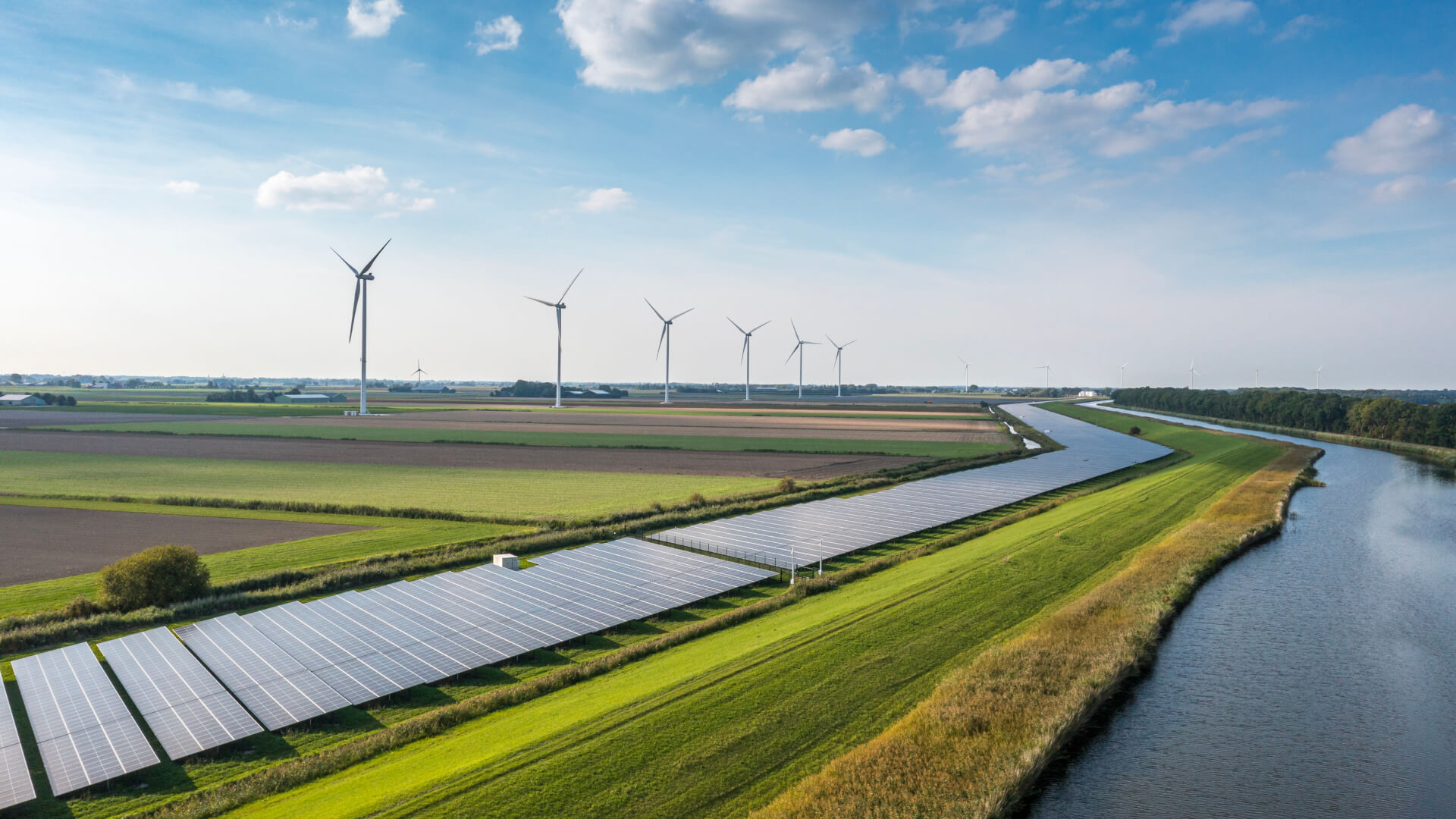
Europe’s electricity grid is evolving fast. Variable wind and solar generation, cross-border power flows and millions of distributed energy resources (DERs) now push energy through networks built initially for one-way traffic. Distribution System Operators (DSOs) like Bayernwerk must manage voltage fluctuations, safety-critical field operations and growing regulatory requirements — all while storms, heatwaves, and long equipment lead times add pressure.
Fast access to the right specs or procedures can differentiate between safe operations and costly downtime. Bayernwerk sought a GenAI field operations assistant that would automatically generate permission-aware, source-linked briefs for each work order, supporting the company’s Vision Zero goal of eliminating serious work-related accidents.
“We wanted a way to quickly surface new policy revisions and link back to the official documentation without making people dig through folders or emails,” said Iman Soltanzadeh, Data Science Manager at E.ON Digital Technology.
Fragmented technical specs, HSE policies and Standard Operating Procedures (SOPs) lived across various systems. Users often spend excessive time searching for documents or verifying versions, creating bottlenecks that can significantly drain operational costs. Outdated or incomplete information increased operational risk. For field ops, accuracy was domain-specific: the assistant needed to understand everything from voltage procedures to PPE requirements in the German regulatory context. Generic AI wasn’t enough. Bayernwerk needed a solution that combined speed, accuracy, and governance. These requirements made the Databricks Data + AI Platform and Agent Bricks the clear choice.
Turning siloed data into seamless intel for field ops
With ambitions to build their GenAI assistant, Bayernwerk began using Delta Lake to store structured and unstructured data critical to fieldwork and operational safety. These datasets were ingested with Databricks, from sources like SharePoint (e.g., SOPs, policies and manuals, environmental logs), and MAQSIMA (e.g., equipment specs, worker safety manuals and guidance on hazardous materials compliance). Previously siloed, these data systems forced employees to waste time looking for data, delaying operations and increasing the risk of errors that could lead to costly downtime or regulatory fines.
Databricks Pipelines extracted, cleaned and normalized documents and tables, triggered routine refresh jobs for near-real-time access and prepared content for downstream embedding and AI retrieval. Using these workflows, the team kept the retrieval augmented generation (RAG) pipeline accurate for Bayernwerk AI Agents. By centralizing diverse data sources, Databricks handled all file formats with ease, supported ACID-compliant tables, enabled scalable document indexing and provided real-time access for historical tracking and regulatory compliance.
“Once we had the data flowing, governance was the next big hurdle,” said Iman. “Unity Catalog filled that gap. It gave us the control we needed to enforce source-level permissions across every point solution.” Using centralized metadata and lineage tracking, teams better understood where data came from, how it was used and who had access to what. For example, when a field technician queried Bayernwerk AI Agents, Unity Catalog ensured that only documents they could access were included in the response, delivering permission-aware accuracy without creating new compliance risks.
Next, Bayernwerk introduced Databricks AI Search into the mix, enabling their GenAI assistant to retrieve relevant chunks of information based on field manager queries. These responses were grounded in verified source content and served in milliseconds for near-real-time use, eliminating hallucinations and increasing technician trust. As adoption stabilized, it paved the way for more agentic behavior, where Bayernwerk AI Agents began to understand user intent and break down complex queries (e.g., "What's the safe procedure to replace a 20kV cable?"), autonomously gathering specific inputs, such as cable specification PDFs, to formulate a response.
To keep pace with new energy challenges, Bayernwerk also needed flexibility. With Agent Bricks AI Gateway, queries could be routed to lightweight models for routine documentation retrieval or to more advanced LLMs for multi-step safety reasoning — always matching the right model to the task. That flexibility reduced costs on high-volume lookups while ensuring reliability in safety-critical decisions. Because these capabilities live natively within the Databricks Data + AI Platform, Bayernwerk avoided stitching together disparate tools and could scale safely with built-in governance and observability. Meanwhile, Databricks Notebooks and Databricks Connect enabled developers to test and refine new agents quickly in a governed workspace. Together, these components of the Databricks Data + AI Platform are transforming Bayernwerk AI Agents from a traditional GenAI pilot into a fully agentic, production-ready assistant that can deliver safer, more efficient guidance across the ever-evolving energy grid.
Looking ahead, the team behind the solution is also exploring Model Context Protocol (MCP) with Databricks to standardize how agents access internal tools and resources. MCP, combined with Unity Catalog, gives them a governed way to extend Bayernwerk AI Agents beyond document retrieval into action-taking workflows — such as surfacing the right equipment database or triggering compliance checks. This approach ensures new agents can safely tap into enterprise systems without creating new silos or governance gaps.
Expanding agentic adoption beyond the pilot phase
After piloting Bayernwerk AI Agents with 60 users, Bayernwerk plans to scale the agentic AI solution to approximately 4,000 business users. Once fully enabled, this will result in a massive saving of working hours every year. Bayernwerk AI Agents also improve safety outcomes, supporting Vision Zero through rapid access to Personal Protective Equipment (PPE), Lockout/Tagout (LOTO) procedures and other hazard protections. Policy changes are communicated automatically, and source-level permissions ensure auditability. New hires ramp up faster with guided briefs and cited procedures, becoming effective contributors sooner.
“As our teams look toward the future, we hope to test more advanced agentic behaviors,” Iman added. “We plan to fold in environmental signals and incident patterns to improve pre-job awareness, multi-modal responses and tool-orchestrated workflows.”
Interest in Bayernwerk’s approach is growing across other E.ON business units. Proactive daily briefs, intuitive policy tracking and agentic workflows are next on the roadmap–positioning Bayernwerk AI Agents as a new operational standard in the clean energy era.
"Bayernwerk AI Agents is set to enhance operational efficiency and employee satisfaction significantly. We are currently piloting the tool with our field teams, focusing on critical use cases like Health, Safety and Environment (HSE) and access to Technical Regulations,” said Iman. “After validating the pilot's performance and quality, we will initiate a strategic rollout, first to around 600 field workers, before progressively expanding its availability to wider groups within the entire company."